Introduction
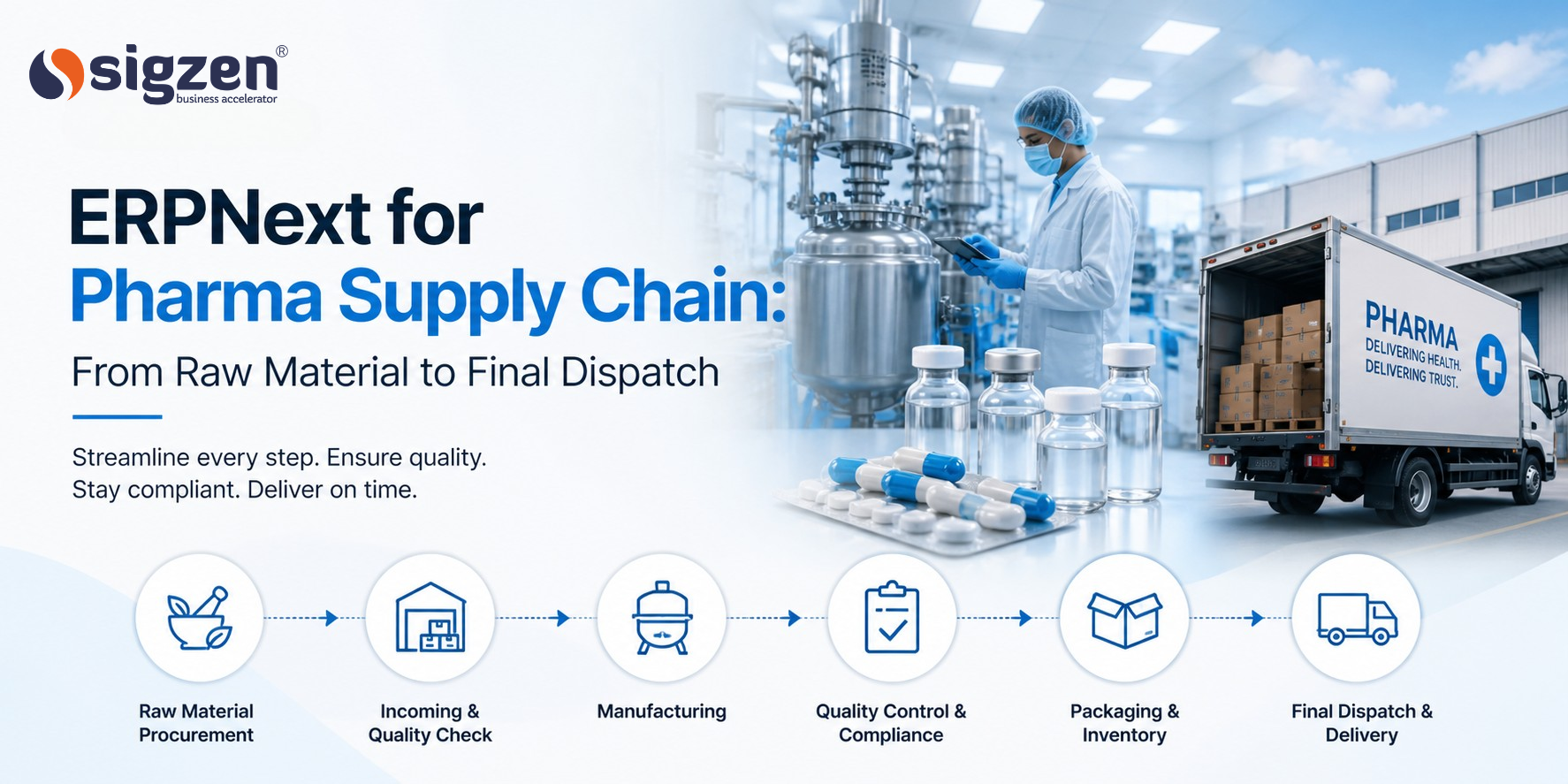
The pharmaceutical industry runs on precision. From sourcing raw materials to delivering finished drugs, every step in the pharma supply chain must be controlled, traceable, and compliant. Yet, many companies still struggle with fragmented systems, manual processes, and limited visibility, creating risks that directly impact both business performance and patient safety.
This is where ERPNext for pharma supply chain management becomes a game-changer.
A modern pharma ERP system like ERPNext connects procurement, manufacturing, quality control, inventory, and distribution into a single, unified platform.
Today, with increasing regulatory pressure (GMP, FDA, CDSCO) and rising demand volatility, relying on outdated systems is no longer sustainable. Companies need a smart, scalable, and integrated ERP solution for pharmaceutical supply chain optimization, one that ensures accuracy from raw material procurement to final dispatch.
In this blog, we’ll break down how ERPNext transforms the pharma supply chain end-to-end, the key features that make it ideal for the pharmaceutical industry, and the real business impact it delivers.
What is ERPNext for Pharma Supply Chain?
ERPNext for pharma supply chain is an integrated, cloud-based ERP solution designed to manage and connect every stage of pharmaceutical operations, from raw material procurement to final product dispatch, within a single, unified system.
Understanding ERPNext in Pharmaceutical Supply Chain Management
At its core, ERPNext for pharmaceutical industry helps businesses:
- Manage procurement and vendor approvals
- Track raw materials and finished goods with batch numbers
- Execute production planning and manufacturing workflows
- Maintain quality inspections and compliance records
- Control inventory with expiry and serialization tracking
- Streamline distribution, logistics, and final dispatch
Unlike traditional systems, ERPNext eliminates data silos by providing a single source of truth, enabling teams across departments to work with accurate, real-time data.
Why ERPNext is Purpose-Built for Pharma Supply Chains
Pharma supply chains are not like standard manufacturing. They require:
- Complete end-to-end traceability for audits and recalls
- Accurate expiry and batch management
- Detailed documentation and validation processes
ERPNext addresses these requirements through configurable workflows, automated documentation, and built-in compliance capabilities, making it a reliable ERP for pharma supply chain optimization.
How ERPNext Connects the Entire Pharma Supply Chain
ERPNext links every stage of the supply chain into a seamless flow:
- Procurement → Quality Check → Production → Inventory → Distribution → Dispatch
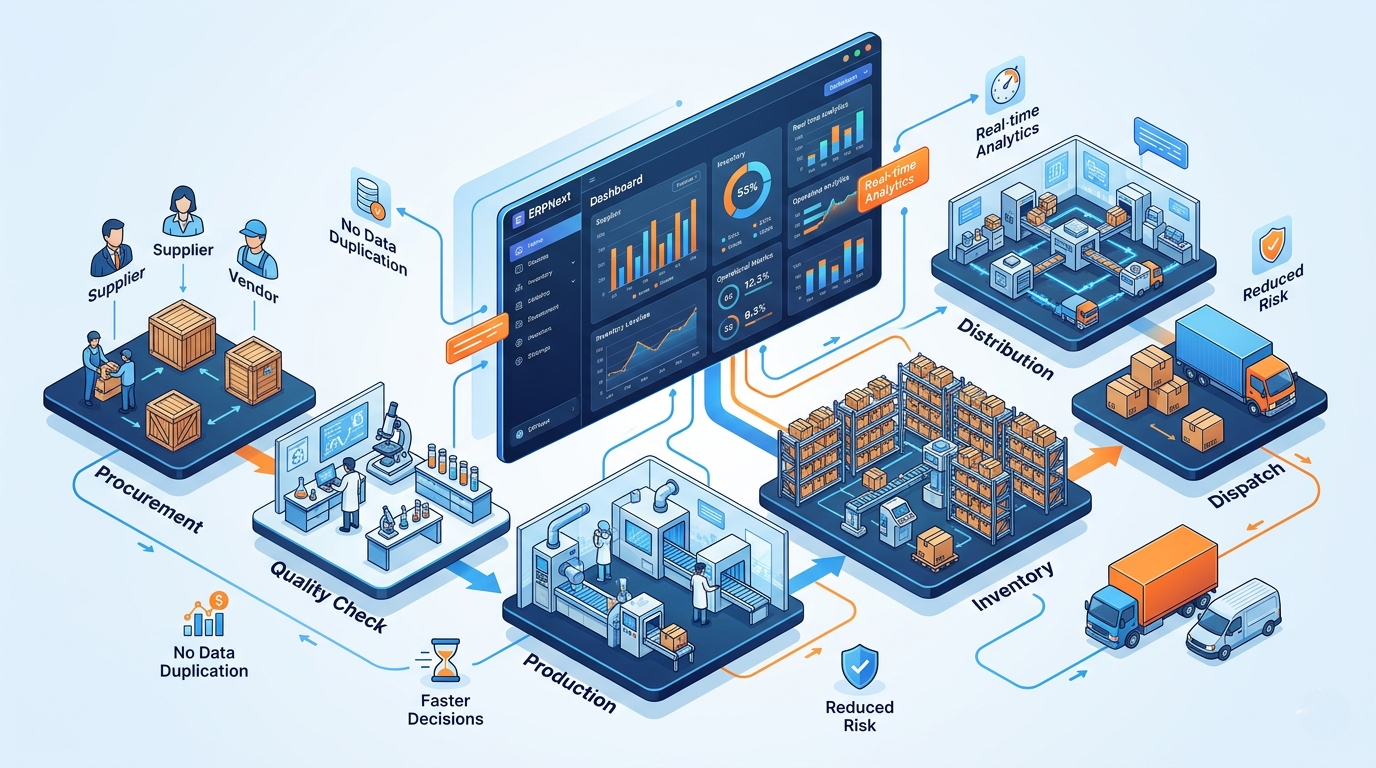
But having a system is only part of the story. Let’s now understand why visibility across the pharma supply chain is so important and what happens when it’s missing.
Why Pharma Supply Chains Are Complex (Key Challenges & Risks)
Pharmaceutical supply chains are not just operational, they are highly regulated, data-intensive, and risk-sensitive ecosystems. Unlike traditional industries, every step must be traceable, compliant, and precisely controlled.
Below is a structured view of the core challenges in pharma supply chain management and the risks they create:
Regulatory Compliance & Documentation Overload
Pharma companies must comply with GMP, FDA, and CDSCO regulations, which demand strict process control and documentation at every stage.
- Heavy reliance on documentation and audit trails
- Frequent inspections and regulatory updates
Business Risk: Errors or missing records can result in penalties, product recalls, or even operational shutdowns.
Lack of End-to-End Visibility
Many organizations still operate with disconnected systems across procurement, manufacturing, and distribution.
- Data silos across departments
- No real-time tracking of materials or products
Business Risk: Delays, inefficiencies, and poor decision-making due to incomplete or outdated information.
Batch Traceability & Recall Complexity
Every product must be traceable back to its raw material source and production batch.
- Difficulty tracking batch movement across stages
- Manual processes slow down traceability
Business Risk: Inefficient recalls, higher costs, and damage to brand trust.
Expiry-Sensitive Inventory Management
Pharma inventory is highly sensitive to shelf life and storage conditions.
- Managing expiry dates across multiple warehouses
- Balancing stock levels to avoid overstocking or shortages
Business Risk: Expired stock losses, compliance issues, and reduced profitability.
Quality Control & Process Consistency
Quality checks must be enforced at every stage from raw materials to finished goods.
- Inconsistent quality inspection processes
- Lack of standardized workflows
Business Risk: Product rejection, safety concerns, and regulatory non-compliance.
Multi-Location Operations Complexity
Pharma companies typically operate across multiple plants, warehouses, and distribution centers.
- Difficulty coordinating operations across locations
- Limited centralized control
Business Risk: Increased logistics costs, delayed deliveries, and operational inefficiencies.
Supply Chain Security & Counterfeit Risks
Ensuring product authenticity is critical in pharma supply chains.
- Limited visibility across the distribution network
- Risk of counterfeit products entering the chain
Business Risk: Patient safety risks, legal issues, and brand damage.
The Bigger Picture
Individually, these challenges are manageable but together, they create a high-risk, high-complexity supply chain environment that traditional systems struggle to handle.
To overcome this, pharma companies need a solution that brings visibility, control, automation, and compliance into a single system.
Next, we’ll break down how ERPNext streamlines the entire pharma supply chain from raw material procurement to final dispatch with a step-by-step workflow.
How ERPNext Streamlines Pharma Supply Chain
ERPNext ensures that every stage in the pharma supply chain flows seamlessly into the next.
| Stage | What Happens | Business Outcome |
| Procurement | Vendor selection & purchase orders | Approved sourcing |
| Quality Check | Inspection & batch assignment | Traceability ensured |
| Production | Manufacturing & process execution | Consistent output |
| Inventory | Stock tracking with expiry | Reduced wastage |
| Warehousing | Storage & internal movement | Organized operations |
| Dispatch | Shipping & delivery tracking | Faster fulfillment |
Key Features of ERPNext for Pharma Industry
ERPNext is designed to handle the precision, compliance, and traceability requirements of pharmaceutical operations. Instead of isolated features, it offers tightly connected capabilities that support the entire supply chain.
Here’s a deeper look at how each feature works and why it matters:
1. End-to-End Batch Traceability
ERPNext enables you to assign and track batch numbers at every stage from raw material receipt to finished product delivery. Every transaction (purchase, production, transfer, or sale) is linked to a specific batch.
How it works:
- Batch numbers are created at material entry
- Linked across production, inventory, and sales
- Full backward and forward traceability
Why it matters: In case of defects or recalls, you can instantly identify affected batches, reducing risk, cost, and response time.
2. Smart Inventory with Expiry Intelligence
Inventory in pharma is highly sensitive to expiry dates and storage conditions. ERPNext tracks stock in real time with batch-level details, including manufacturing and expiry dates.
How it works:
- Tracks batch-wise stock across warehouses
- Supports FEFO (First Expiry First Out)
- Provides alerts for near-expiry items
Why it matters: Prevents expired stock, minimizes wastage, and ensures only safe products are dispatched.
3. Integrated Quality Management System
ERPNext embeds quality control checkpoints directly into workflows, whether during procurement, production, or before dispatch.
How it works:
- Quality inspections at incoming, in-process, and final stages
- Configurable acceptance/rejection criteria
- Automatic linking with batches and transactions
Why it matters: Ensures consistent product quality while reducing manual errors and compliance risks.
4. Compliance-Ready Documentation & Audit Trails
Pharma companies require extensive documentation for regulatory compliance. ERPNext automatically records every transaction and maintains detailed logs.
How it works:
- Generates batch manufacturing records (BMR)
- Maintains audit trails for all actions
- Stores compliance documents centrally
Why it matters: Simplifies audits and ensures readiness for GMP, FDA, and CDSCO inspections.
5. Controlled Production Planning & Execution
ERPNext standardizes manufacturing processes using structured workflows and planning tools.
How it works:
- Defines Bill of Materials (BOM)
- Creates and manages work orders
- Tracks production progress in real time
Why it matters: Improves production efficiency, reduces process deviations, and ensures consistent output quality.
6. Multi-Location Warehouse & Distribution Control
Pharma businesses often operate across multiple warehouses and distribution centers. ERPNext centralizes control while maintaining flexibility.
How it works:
- Real-time stock visibility across locations
- Inter-warehouse transfers and tracking
- Region-wise stock allocation and dispatch planning
Why it matters: Enhances coordination, reduces delays, and ensures timely delivery across the supply chain.
Bringing It All Together
These features are not standalone, they are deeply integrated. This means:
- Data flows seamlessly across departments
- Processes are automated and standardized
- Compliance and traceability are built into every step
The result is a connected, efficient, and compliance-ready pharma supply chain system.
Now Let’s see how these features translate into real business benefits like improved efficiency, stronger compliance, and measurable ROI.
Choosing the Right ERPNext Implementation Partner for Pharma Success
A successful ERPNext implementation in the pharmaceutical industry requires more than just deployment, it needs alignment with regulatory compliance, batch traceability, and real-world supply chain workflows.
The right partner ensures ERPNext is configured to meet GMP, FDA, and CDSCO requirements, while fitting seamlessly into your existing operations.
Sigzen supports pharma businesses with a structured and scalable ERPNext implementation approach, covering key areas like procurement, quality management, production, inventory, and distribution. The focus is on mapping ERPNext to actual business use cases, ensuring better adoption, compliance readiness, and operational efficiency.
Conclusion
Pharma supply chains demand precision, traceability, and compliance at every step. From raw material sourcing to final dispatch, even minor inefficiencies can lead to significant operational and regulatory risks.
ERPNext addresses this gap by bringing procurement, quality, production, inventory, and distribution into one unified platform.
However, the real impact of ERPNext depends on how well it is implemented and aligned with your business workflows. With the right approach, it becomes more than just an ERP, it becomes a foundation for scalable, compliant, and future-ready operations.
Ready to Transform Your Pharma Supply Chain?
Connect with our ERPNext experts to explore a tailored solution for your pharma business
FAQs
1. How does ERPNext help in pharma supply chain management?
ERPNext streamlines procurement, production, quality control, and distribution while ensuring batch traceability and regulatory compliance.
2. Is ERPNext suitable for pharmaceutical companies?
Yes, ERPNext supports GMP compliance, batch tracking, expiry management, and audit readiness, making it ideal for pharma businesses.
3. What are the key features of ERPNext for the pharma industry?
Key features include batch traceability, real-time inventory, compliance automation, demand forecasting, and multi-warehouse management.
4. Can ERPNext handle pharma compliance requirements?
Yes, ERPNext can be customized to meet FDA, GMP, and CDSCO compliance through workflows, documentation, and audit logs.
5. What is the cost of ERPNext for pharma companies?
ERPNext is cost-effective compared to traditional ERPs, with lower licensing costs and flexible implementation options.