ERP solutions are nothing new for businesses. Most organizations today understand the value of having a centralized system to manage their operations, finances, inventory, sales, and customer data.
However, a few long-standing myths still surround ERP software.
Many businesses assume ERP systems are complex to implement, create complete dependency on vendors, and come with endless licensing costs and restrictions.
Perhaps the biggest myth of all is that businesses must adapt their processes to fit the ERP software, rather than the software adapting the way they operate.
But that equation has changed.
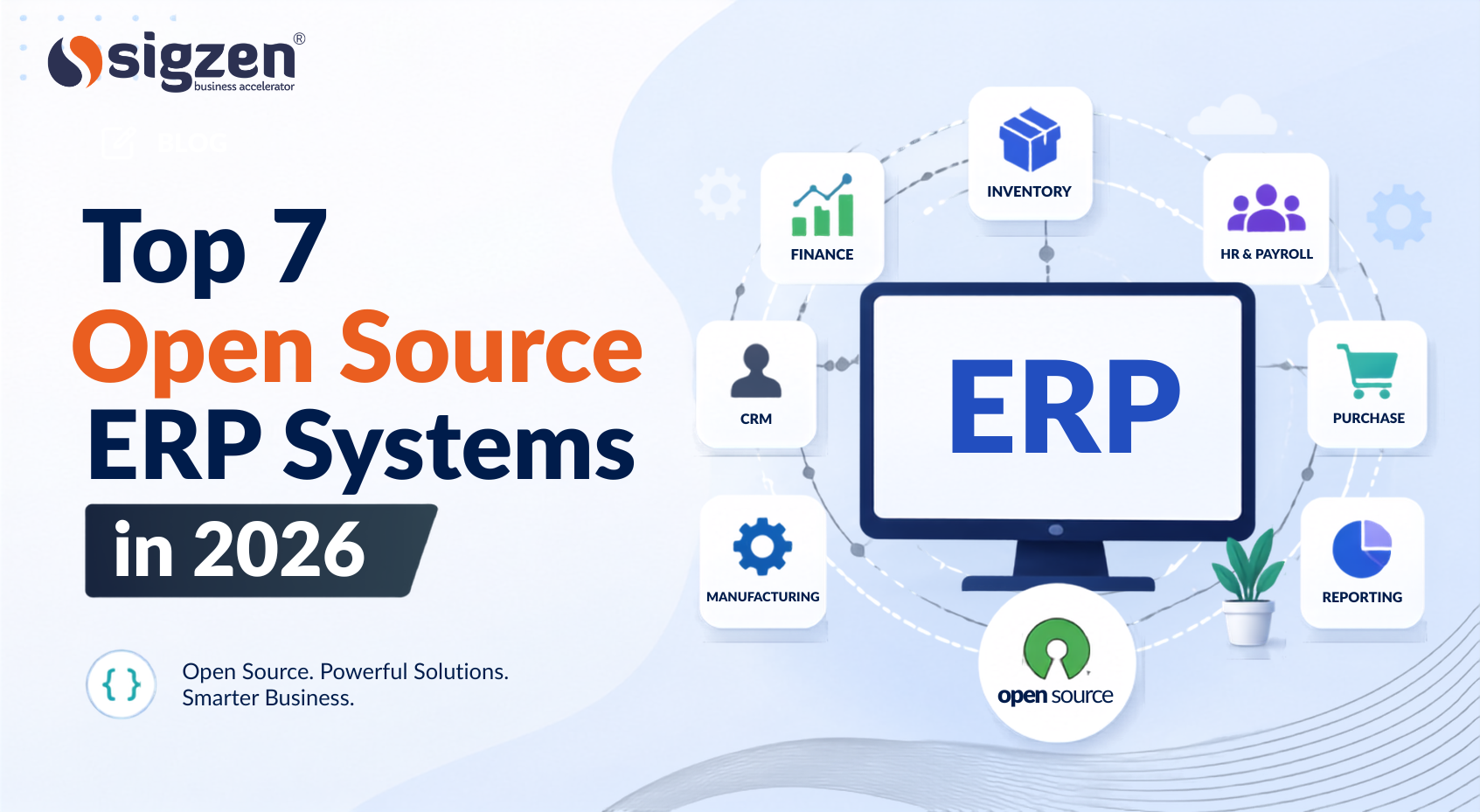
Today, businesses are increasingly questioning whether they need to spend thousands of dollars every year on proprietary ERP platforms when mature open-source alternatives can deliver many of the same capabilities with greater flexibility, customization, and control.
The open-source ERP ecosystem has evolved significantly over the years. Modern solutions offer everything from accounting and inventory management to manufacturing, CRM, project management, and workflow automation.
The challenge is no longer finding an open-source ERP system. The challenge is choosing the right one.
To help you make an informed decision, we've analyzed the top open-source ERP systems available in 2026 and compared them based on features, scalability, ease of implementation, customization capabilities, and overall business fit.
Let's dive in.
What to Look for in an Open-Source ERP System
Not all open-source ERP systems are built the same. While most offer core functionalities like accounting, CRM, inventory, and purchasing, the right choice depends on your business requirements.
Before selecting an ERP, consider these key factors:
Industry Fit
Choose a solution that aligns with your business processes, whether you're in manufacturing, distribution, retail, or services.
Scalability
Your ERP should support future growth, including additional users, locations, warehouses, and business entities.
Ease of Implementation
A feature-rich ERP is only valuable if your team can adopt it easily. Look for a user-friendly interface and a manageable learning curve.
Customization
Every business has unique workflows. The ability to customize forms, reports, and processes can make a significant difference in the long run.
Community and Support
An active community and strong partner ecosystem ensure better documentation, regular updates, and easier access to support.
Total Cost of Ownership
Open source doesn't always mean free. Consider implementation, hosting, customization, training, and maintenance costs before deciding.
With these factors in mind, let's compare the top open-source ERP systems available in 2026.
Quick Comparison of the Top 7 Open Source ERP Systems in 2026
Each ERP system has its own strengths and ideal use cases. While some are better suited for manufacturing and supply chain management, others focus on flexibility, ease of use, or enterprise-level scalability.
Here's a quick overview of how the top open-source ERP systems compare in 2026.
| ERP System | Best For | Deployment | Ease of Use | Customization | Manufacturing | Community Support |
| ERPNext | SMBs, Manufacturing, Distribution | Cloud & Self-Hosted | High | High | Excellent | Strong |
| Odoo Community | Growing Businesses | Cloud & Self-Hosted | High | Very High | Very Good | Very Strong |
| Dolibarr | Small Businesses & Startups | Cloud & Self-Hosted | Very High | Moderate | Basic | Strong |
| Tryton | Mid-Sized Businesses | Self-Hosted | Moderate | High | Good | Moderate |
| Apache OFBiz | Large Enterprises | Self-Hosted | Low | Very High | Good | Moderate |
| iDempiere | Complex Enterprise Operations | Cloud & Self-Hosted | Moderate | High | Good | Strong |
| Metasfresh | Manufacturing & Distribution | Cloud & Self-Hosted | Moderate | High | Excellent | Growing |
Top 7 Open Source ERP Systems in 2026
1) ERPNext
ERPNext is an open-source ERP system developed by Frappe Technologies. It is built on the Frappe Framework and provides a unified platform to manage core business functions like accounting, sales, purchasing, inventory, manufacturing, CRM, HR, and projects.It is widely used by small and mid-sized businesses as well as manufacturing and distribution companies due to its strong all-in-one capabilities and flexibility. ERPNext can be deployed on cloud or self-hosted environments, making it suitable for businesses that want both control and scalability.
Key Features
- Accounting and financial management with real-time reporting
- Sales, CRM, and customer lifecycle tracking
- Inventory and warehouse management with multi-location support
- Manufacturing module with BOM, work orders, and production planning
- Purchase and supplier management
- Human resource and payroll management
- Project and task management system
- Asset management and maintenance tracking
- Workflow automation and approval processes
- API-based integrations and customization support
Pros
- Fully integrated system covering all major business functions
- Strong manufacturing and inventory management capabilities
- Clean, modern, and relatively easy-to-use interface for an ERP system
- Highly customizable through Frappe Framework
- Active open-source community and continuous updates
- Flexible deployment (cloud or self-hosted)
Cons
- Requires technical expertise for advanced customization
- Implementation can become complex for large-scale enterprises without experienced support
- Some advanced features may require configuration effort rather than being plug-and-play
Pricing & Licensing
ERPNext is open-source software licensed under GPLv3, which means it can be used, modified, and self-hosted without any licensing cost.
The software itself is free, but businesses may still incur costs for hosting, customization, implementation, and support. Companies can either self-host ERPNext or choose a managed cloud hosting option depending on their technical capacity and requirements.
2) Odoo Community Edition
Odoo Community Edition is an open-source ERP developed by Odoo S.A.. It follows a modular approach where businesses can install and combine different apps like CRM, sales, inventory, and project management based on their needs.
It is widely used by startups and growing businesses because of its flexibility, modern interface, and large ecosystem of add-on applications.
Key Features
- Modular app-based structure
- CRM, sales, and inventory management
- Basic accounting features
- Project and task management
- Website and eCommerce tools
- Third-party app marketplace
- API and integration support
Pros
- Highly flexible and modular system
- Modern and user-friendly interface
- Large ecosystem of apps and extensions
- Suitable for a wide range of industries
Cons
- Advanced features require paid Enterprise version
- Community edition has limited accounting capabilities
- Can become complex with multiple custom apps
Pricing & Licensing
Odoo Community Edition is free and open source under LGPL. However, advanced features and official enterprise capabilities are part of the paid version, and overall costs may increase hosting, apps, and customization.
3) Dolibarr
Dolibarr is a lightweight open-source ERP and CRM system developed by Dolibarr ERP & CRM. It is designed primarily for small businesses, freelancers, and very small teams that need a simple and easy-to-use business management tool without complex implementation.
Unlike full-scale ERP systems, Dolibarr focuses on essential business functions such as invoicing, customer management, products, and basic inventory.
Key Features
- CRM and customer management
- Invoicing and billing
- Product and stock management
- Basic accounting functions
- Project and task tracking
- Simple HR tools
- Modular add-on system
Pros
- Very easy to install and use
- Lightweight and fast compared to full ERP systems
- Suitable for freelancers and small businesses
- Simple interface with minimal learning curve
- Open-source and free to use
Cons
- Limited advanced ERP capabilities
- Not suitable for complex manufacturing or large enterprises
- Basic reporting and analytics features
- Smaller ecosystem compared to larger ERP platforms
Pricing & Licensing
Dolibarr is open-source software and free to use under GPL licensing. Businesses may still incur costs for hosting, customization, or third-party modules depending on their requirements.
4) Tryton
Tryton is an open-source, modular ERP platform developed by Tryton ERP. It is designed as a highly flexible business application framework rather than a fully opinionated ERP system, making it popular among developers and technically strong organizations.
It follows a modular architecture where core functionalities can be extended through independent modules, allowing businesses to build a customized ERP tailored to their exact workflows.
Key Features
- Modular ERP architecture
- Accounting and financial management
- Sales and purchase management
- Inventory and stock control
- Multi-company and multi-currency support
- Custom module development support
- Strong Python-based framework
Pros
- Highly flexible and developer-friendly
- Clean and stable architecture
- Strong for custom ERP builds
- Good multi-company and accounting support
- Lightweight core system
Cons
- Requires strong technical expertise
- Not beginner-friendly or plug-and-play
- Smaller community compared to major ERP systems
- Limited ready-made business modules
Pricing & Licensing
Tryton is fully open-source and released under the GNU General Public License (GPL). It can be self-hosted without licensing fees, but implementation and customization usually require technical resources or developer support.
5) ApacheOFBiz
Apache OFBiz is an open-source enterprise resource planning system developed under the Apache Software Foundation. It is a highly flexible ERP framework that provides a set of core business applications and tools to build customized enterprise-level solutions.
Unlike more out-of-the-box ERP systems, OFBiz is primarily a framework. It gives organizations the building blocks for ERP functionality rather than a ready-to-use, fully structured business suite.
Key Features
- E-commerce and order management system
- Product and catalog management
- Accounting and financial modules
- Inventory and warehouse management
- Manufacturing and supply chain tools
- Workflow and business process engine
- Highly customizable framework architecture
Pros
- Extremely flexible and framework-oriented
- Suitable for complex enterprise requirements
- Strong customization capabilities
- Backed by Apache Foundation
- No licensing cost
Cons
- Very steep learning curve
- Requires strong technical and development expertise
- Not suitable for quick or easy implementation
- Limited ready-to-use business UI compared to modern ERPs
- Smaller ecosystem of implementation partners
Pricing & Licensing
Apache OFBiz is completely open-source and free under the Apache 2.0 License. However, real-world implementation costs can be significant due to the technical expertise required to customize and deploy the system effectively.
6) iDempiere
iDempiere is an open-source enterprise resource planning system that originated as a community-driven continuation of the ADempiere project. It is designed for complex business environments that require strong process control, extensibility, and enterprise-grade functionality.
It is often used by organizations that need deep customization and advanced ERP capabilities, particularly in supply chain, finance, and manufacturing-heavy operations.
Key Features
- Advanced accounting and financial management
- Supply chain and inventory management
- Sales and order management
- Manufacturing and production planning
- Business process management (BPM) engine
- Multi-org and multi-currency support
- Plugin-based modular architecture
Pros
- Highly extensible and modular architecture
- Strong enterprise-level functionality
- Good for complex business processes
- Active community-driven development
- Free and open-source
Cons
- Steep learning curve for new users
- Requires technical expertise for setup and customization
- UI is less modern compared to newer ERP systems
- Implementation can be time-consuming
- Smaller ecosystem compared to mainstream ERPs
Pricing & Licensing
iDempiere is open-source software released under GPL licensing. There are no licensing fees, but implementation, customization, and maintenance typically require experienced technical teams or consultants.
7) Metasfresh
Metasfresh is a modern open-source ERP system developed by metasfresh ERP. It is designed primarily for mid-sized businesses with a strong focus on distribution, manufacturing, and complex supply chain operations.
Unlike older ERP systems that feel heavy or outdated, Metasfresh focuses on performance, usability, and scalability while still offering deep ERP functionality. It is often positioned as a “modern alternative” for businesses that need enterprise-level capabilities without relying on traditional legacy systems.
Key Features
- Advanced inventory and warehouse management
- Sales and order processing
- Procurement and supplier management
- Manufacturing and production planning
- Real-time reporting and analytics
- Multi-client and multi-warehouse support
- API-first architecture for integrations
Pros
- Strong performance for high-volume transactions
- Modern and responsive interface
- Excellent for manufacturing and distribution businesses
- Highly scalable architecture
- Active development and continuous updates
Cons
- Smaller community compared to ERP giants
- Requires technical expertise for setup and customization
- Limited out-of-the-box ecosystem compared to Odoo or ERPNext
- Implementation can be complex for non-technical teams
Pricing & Licensing
Metasfresh is open-source software released under GPL licensing. It can be used without licensing fees, but businesses typically invest in hosting, implementation, and customization services for production use.Which Open Source ERP Should You Choose?
Choosing the right ERP depends heavily on your business size, industry, and technical capabilities. Instead of comparing features one by one, here’s a simple way to identify the best-fit system based on real-world use cases.Quick Recommendation Guide
| If You Are… | Best ERP Choice |
| A manufacturing or distribution business | ERPNext / Metasfresh |
| A growing SMB looking for an all-in-one ERP | ERPNext |
| A startup or small business needing simplicity | Dolibarr |
| A company wanting modular, app-based expansion | Odoo Community Edition |
| A technically strong team building custom ERP | Tryton / Apache OFBiz |
| A complex enterprise with deep workflows | iDempiere |
Simple Takeaway
- ERPNext is the most balanced choice for most growing businesses because it combines accounting, CRM, inventory, HR, and manufacturing in one integrated system.
- Odoo is best if you prefer a modular ecosystem and want to build functionality step by step.
- Dolibarr works well for very small teams that need simplicity over depth.
- Tryton and OFBiz are better suited for technical teams building highly customized systems.
- iDempiere and Metasfresh fit more complex, enterprise-scale environments.
Common Challenges When Implementing an Open Source ERP
Implementing an open-source ERP system can significantly improve business efficiency, but the process is often more complex than it initially appears. Many organizations face challenges not because of the software itself, but because of planning, execution, and change management.
User Adoption Resistance
Employees are often comfortable with existing tools and workflows. Switching to a new ERP system can lead to resistance, especially if the interface or processes are unfamiliar.
Over-Customization
While open-source ERP systems offer high flexibility, excessive customization can make the system difficult to maintain, upgrade, and scale in the long run.
Lack of Internal Expertise
Many businesses underestimate the technical knowledge required to implement and manage an ERP system. Without experienced resources, projects can face delays or inefficient configurations.
Integration Complexity
Modern businesses rely on multiple tools such as CRMs, eCommerce platforms, payment gateways, and logistics systems. Integrating all of them with an ERP system can be time-consuming and technically demanding.
Key Takeaway
Most ERP implementation challenges are not software limitations; they are execution challenges. With proper planning, the right implementation approach, and clear business requirements, these issues can be significantly reduced.
How to Choose the Right Open-Source ERP for Your Business
Choosing the right open-source ERP depends more on your business needs than on features alone. The goal is to find a system that fits your operations, team size, and future growth.
Start by identifying your business type. Manufacturing and distribution companies often need strong inventory and production features, while small businesses may prefer simpler systems like Dolibarr. Growing companies usually benefit from modular systems like Odoo, while highly complex organizations may need frameworks like iDempiere or Apache OFBiz.
Next, consider how easy the system is to implement and whether your team can adopt it quickly. Scalability is also important, your ERP should support growth in users, locations, and transactions.
Finally, look at customization and total cost of ownership. Even open-source ERP systems involve costs for implementation, hosting, training, and maintenance.
In the end, the right ERP is the one that matches your business processes and can grow with your company over time.
How Sigzen Can Help You with ERPNext Implementation
Implementing an ERP system requires the right planning, setup, and alignment with business processes.
We help businesses implement and customize ERPNext based on their operational needs. As an official implementation partner of Frappe Technologies, we provide consulting, deployment, and support services across industries like manufacturing, distribution, retail, and services.
Our focus is on understanding your workflows first and then configuring ERPNext to fit your business, ensuring smoother adoption and better efficiency.
Whether you are evaluating ERPNext or planning an implementation, we help you move from planning to execution with the right approach.
Ready to streamline your business operations with ERPNext?
Get in touch today to start your ERPNext journey with the right implementation approach.
FAQs
What is an open-source ERP system?
An open-source ERP system is business management software whose source code is publicly available. Businesses can use, modify, and customize it to manage operations like accounting, inventory, sales, HR, and manufacturing.
Which is the best open-source ERP in 2026?
There is no single “best” ERP for everyone. However, ERPNext is often preferred for its balance of features, usability, and manufacturing capabilities, while Odoo is popular for modular expansion.
Can open-source ERP systems be customized?
Yes, most open-source ERP systems allow customization such as workflows, reports, modules, and integrations, but technical expertise is often required.
Is ERPNext better than Odoo?
ERPNext and Odoo serve different needs. ERPNext offers a more complete all-in-one ERP experience, while Odoo provides a modular approach where businesses can build features as needed.
Do open-source ERP systems scale with business growth?
Yes, many open-source ERP systems like ERPNext, Odoo, and iDempiere are designed to scale with growing users, data, and business complexity.
What are the main challenges in ERP implementation?
Common challenges include data migration, user adoption, customization complexity, integration with other tools, and lack of proper planning or expertise.
Reader rating
How useful was this article? Tap a star to rate.