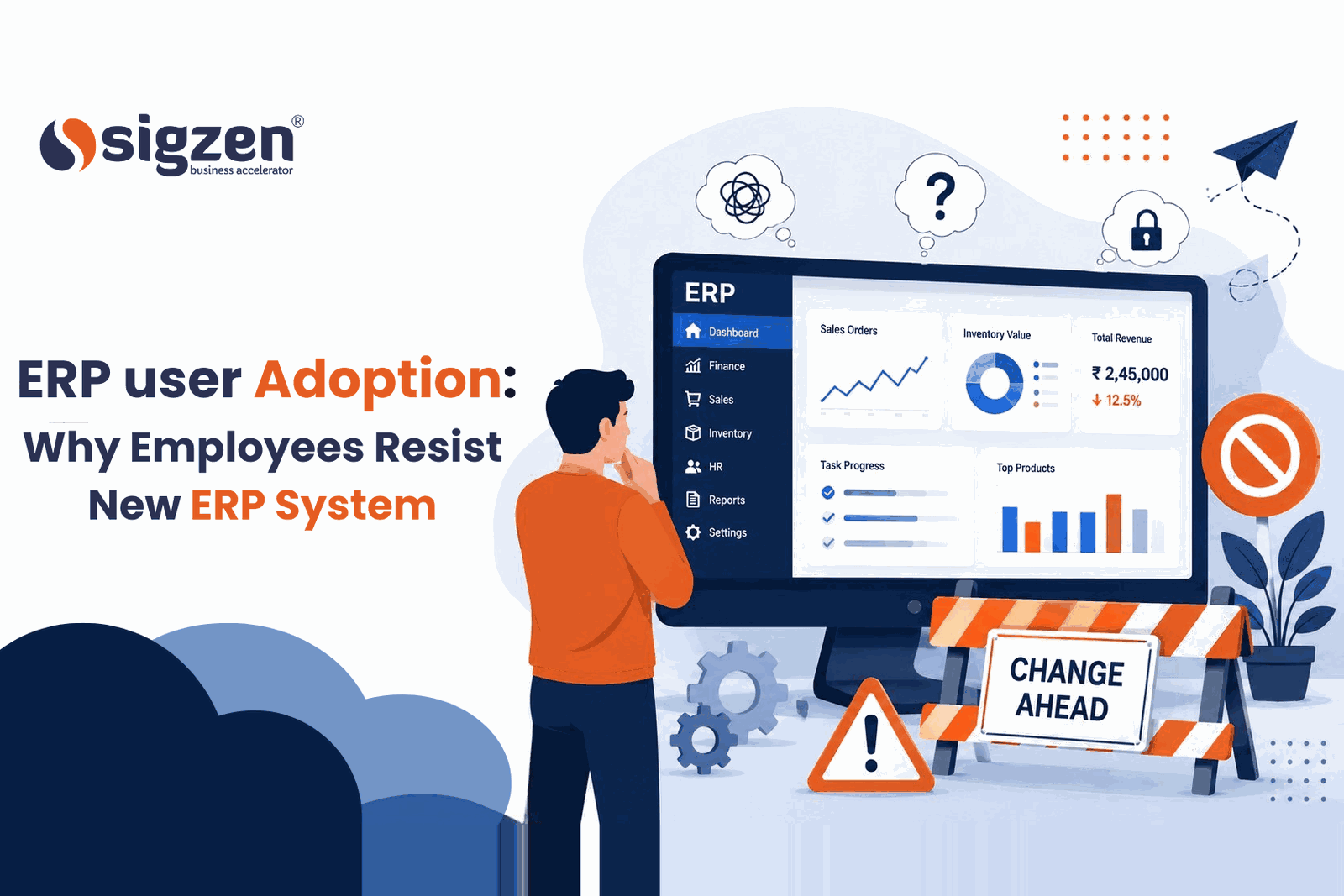
ERP user adoption is how consistently employees use an ERP system as their primary way of working, instead of falling back to spreadsheets, emails, and manual processes. Employees resist new ERP systems mainly because of unclear purpose, unfamiliar workflows, generic training, and fear of increased visibility. Every one of these causes can be addressed with structured change management.
Here is how that plays out in practice. You've invested months in selecting an ERP system, preparing your data, configuring workflows, and finally going live. But a few weeks later, something feels off.
Employees are still updating Excel sheets. Some teams keep asking for reports over email. Others avoid certain ERP features altogether because "the old way was easier." The system is live, but daily work hasn't really changed.
This is one of the most common challenges organizations face after an ERP implementation. The software isn't the problem. Getting people to change the way they work is.
The good news: employee resistance isn't something you have to accept. Once you understand what's causing it, you can take practical steps to improve adoption, build confidence, and help your teams get full value from the system. Let's look at what drives resistance and how to address it effectively.
What Is ERP User Adoption and Why Is It Critical to ERP Success?
ERP user adoption refers to how consistently employees use an ERP system as part of their daily work. It isn't measured by the number of logins or completed transactions alone.
True adoption happens when employees rely on the ERP as their primary system instead of switching back to spreadsheets, emails, or manual processes. Without widespread adoption, even a technically successful ERP implementation can struggle to deliver the operational improvements the business expected.
Key characteristics of strong ERP adoption:
- Employees complete daily tasks within the ERP.
- Business data is updated accurately and on time.
- Teams follow standardized workflows instead of manual workarounds.
- Departments rely on the same real-time information.
- Managers use ERP reports to make business decisions.
Why it matters: strong ERP user adoption improves data accuracy across departments, reduces duplicate work and manual errors, increases process consistency, gives better operational visibility, and speeds up the return on your ERP investment. Poor adoption does the opposite: fragmented data, inconsistent processes, and employees continuing to rely on disconnected tools.
Why Do Employees Resist New ERP Systems?
Employee resistance to a new ERP system is rarely about rejecting technology itself. More often, it's a response to changes in familiar routines, increased accountability, unclear expectations, or concerns about how the new system will affect daily work. Understanding these underlying reasons helps you address adoption challenges before they impact productivity.
1. Employees don't understand the reason behind the change
When employees don't know why a new ERP system is being introduced, it's easy for them to see it as an unnecessary disruption rather than an improvement. If communication focuses only on the software instead of the business goals, employees are less likely to support the transition.
Common signs: questions like "Why are we changing?", assuming the current process works well enough, and low participation in implementation activities.
2. Familiar processes feel easier than new workflows
People naturally prefer processes they've followed for years. Even if the ERP simplifies work in the long run, the initial learning curve can make existing methods, Excel sheets, emails, paper records, can feel faster and more comfortable.
This often leads to: parallel spreadsheets, delayed ERP data entry, and a return to manual approvals.
3. Training doesn't reflect real job responsibilities
Many ERP implementations provide general system demonstrations instead of role-based training. Employees may learn where to click but not how the ERP supports the tasks they perform every day. Effective training covers day-to-day workflows, practices real business scenarios, and builds confidence before go-live.
4. Employees feel overwhelmed by new processes
An ERP implementation often changes more than software, it changes responsibilities, approvals, and day-to-day workflows. Introducing too many changes at once can leave employees feeling uncertain, increasing resistance even when they support the project.
5. Increased transparency can create discomfort
ERP systems make business activities more visible through audit trails, standardized workflows, and real-time reporting. While this improves accountability, some employees may initially worry that every action is being monitored or evaluated. Common concerns include fear of making mistakes, increased accountability, and changes in approval processes.
6. Change fatigue reduces engagement
When employees have recently gone through multiple organizational changes, new systems, process updates, restructures, or policy changes, they may feel overwhelmed. Even a well-planned ERP implementation can face resistance simply because teams have limited capacity to absorb another major change.
How Do You Improve ERP User Adoption?
Improving ERP user adoption isn't about asking employees to use the system more often. It requires a structured approach that combines communication, training, leadership involvement, and continuous support throughout the ERP implementation journey.
1. Communicate the purpose behind the ERP implementation
Employees are more likely to support change when they understand why it's happening. Instead of focusing only on new features, explain the business challenges the ERP is intended to solve and how it will improve day-to-day operations for different teams. Explain the business goals, address concerns early, share expected benefits per department, and keep communication consistent throughout the project.
2. Involve employees before the ERP goes live
Employees who participate in discussions, testing, and process reviews feel a greater sense of ownership. Include representatives from each department, conduct User Acceptance Testing (UAT), gather feedback on business workflows, and validate real-world use cases before go-live.
3. Deliver role-based training instead of generic sessions
A finance executive, a warehouse operator, and a production planner use the ERP differently. Role-based ERPNext training should reflect these differences by focusing on role-specific tasks rather than general system navigation: real business scenarios, hands-on practice, delivered close to go-live, and continued after implementation.
4. Keep business processes simple and practical
Complicated workflows discourage consistent ERP use. Before introducing customizations or additional approvals, review whether existing processes can be simplified: reduce unnecessary steps, standardize workflows, eliminate duplicate data entry, and make frequently used processes easier to complete.
5. Identify ERP champions across departments
Every organization has employees who adapt to change quickly. These individuals can support their teams, answer everyday questions, share practical tips, escalate workflow issues, and promote best practices within their teams.
6. Measure adoption beyond login statistics
Logging into the ERP doesn't necessarily mean employees are using it effectively. Monitor practical indicators: process completion within the ERP, data accuracy, usage of key modules, reduction in spreadsheet dependency, and support requests after go-live.
7. Gather feedback and continuously improve
User adoption doesn't end after implementation. Conduct periodic user surveys, review adoption metrics, update training materials, and refine workflows based on feedback as business requirements evolve.
Common ERP User Adoption Mistakes to Avoid
| Mistake | What to do instead |
|---|---|
| Treating user adoption as an afterthought | Plan user adoption from the beginning of the implementation, not after go-live |
| Relying on one-time training | Provide continuous, role-based training so confidence builds over time |
| Failing to explain the "why" | Communicate why the ERP is being implemented and how it benefits business and employees |
| Allowing parallel systems | Minimize spreadsheets, paper records, and manual workarounds after implementation |
| Ignoring employee feedback | Collect user feedback regularly to identify challenges and improve the experience |
| Expecting immediate adoption | Give employees time, guidance, and ongoing support to adapt |
| Lack of leadership involvement | Managers should actively use and promote the ERP themselves |
| Not tracking adoption metrics | Monitor system usage, process compliance, and engagement to find improvement areas |
ERP User Adoption Best Practices Across Different Industries
While the objective of ERP user adoption remains the same everywhere, the approach varies by industry. Every sector has unique workflows, operational priorities, and compliance requirements.
Manufacturing
Manufacturing organizations should focus on practical, hands-on training that reflects real production workflows. Employees on the shop floor, in production planning, and in inventory management need to understand how the ERP fits into their daily responsibilities. Simplifying workflows, reducing manual data entry, and providing continuous support significantly improve adoption.
Pharmaceutical
In the pharmaceutical industry, ERP adoption goes beyond operational efficiency: it also supports regulatory compliance and product traceability. Training should emphasize accurate documentation, batch management, quality control, and compliance processes so employees understand the importance of reliable data in the ERP.
Chemical
Chemical manufacturers deal with complex formulations, batch production, and strict safety standards. Successful adoption depends on helping employees follow standardized processes, maintain accurate inventory records, and apply consistent production and quality procedures within the ERP.
Retail and Distribution
Retail and distribution businesses need fast, accurate order processing, inventory management, and warehouse operations. Adoption improves when employees can easily perform routine tasks, access real-time information, and rely on the ERP instead of manual tracking or disconnected applications.
Construction and Real Estate
Construction and real estate companies manage multiple projects, vendors, budgets, and documents simultaneously. Adoption succeeds when employees are trained to use the system for project tracking, procurement, financial management, and collaboration instead of spreadsheets and fragmented tools.
Professional Services
For service-based organizations, consistent use of the ERP for project management, resource planning, timesheets, and billing is essential. When consultants and project teams update information regularly, project visibility, resource utilization, and client service all improve.
Food and Beverage
Food and beverage businesses depend on accurate inventory management, batch traceability, expiry tracking, and quality compliance. Employees adopt the ERP more readily when they understand how timely, accurate data entry supports product quality, regulatory compliance, and efficient operations.
An Implementation Perspective from Sigzen
One thing Sigzen's implementation team has consistently observed across ERP projects is that user adoption doesn't happen because employees are told to use the system. It happens when they understand the purpose behind the change, receive training that's relevant to their role, and feel supported as they adapt to new ways of working.
That's why ERP user adoption should be treated as an ongoing business initiative rather than a milestone completed at go-live.
Conclusion
A successful ERP implementation isn't measured by how quickly the software goes live. It is measured by how confidently employees use it in their daily work. When users understand the purpose behind the change, receive practical training, and feel supported throughout the transition, they're far more likely to embrace the system.
Improving ERP user adoption requires continuous effort rather than a one-time initiative. Organizations that invest in clear communication, leadership involvement, ongoing learning, and regular feedback create an environment where employees adapt with confidence. Ultimately, the success of any ERP system depends not only on the technology, but on the people who use it every day.
Planning an ERP implementation? Building a user adoption strategy from day one reduces resistance, improves process consistency, and increases the long-term value of your investment. Talk to Sigzen's ERPNext implementation team about building adoption into your project plan from the start.
Frequently asked questions
What is ERP user adoption?
ERP user adoption refers to how consistently and effectively employees use an ERP system as part of their daily work. It goes beyond simply logging into the system and focuses on making the ERP the primary platform for managing business processes.
Why do employees resist new ERP systems?
Employees often resist new ERP systems due to unfamiliar workflows, inadequate training, unclear communication, concerns about increased accountability, or a preference for existing tools such as spreadsheets and manual processes.
Why is ERP user adoption important?
Strong user adoption helps organizations improve data accuracy, standardize business processes, increase operational visibility, and maximize the return on their ERP investment. Without employee adoption, even a well-implemented ERP system may fail to deliver its expected benefits.
How long does it take to achieve successful ERP user adoption?
The timeline varies with the organization's size, complexity, and change management approach. Employees may become familiar with the ERP within a few weeks, but consistent adoption across the organization often takes several months of continuous training and support.
What are the signs of poor ERP user adoption?
Common signs include employees relying on spreadsheets, incomplete or inaccurate data entry, inconsistent workflows, low usage of ERP features, frequent support requests, and departments bypassing standard ERP processes.
How can organizations improve ERP user adoption?
Organizations can improve adoption by communicating the purpose of the ERP, providing role-based training, involving employees early, simplifying workflows, encouraging leadership participation, and regularly measuring adoption progress.
Reader rating
How useful was this article? Tap a star to rate.