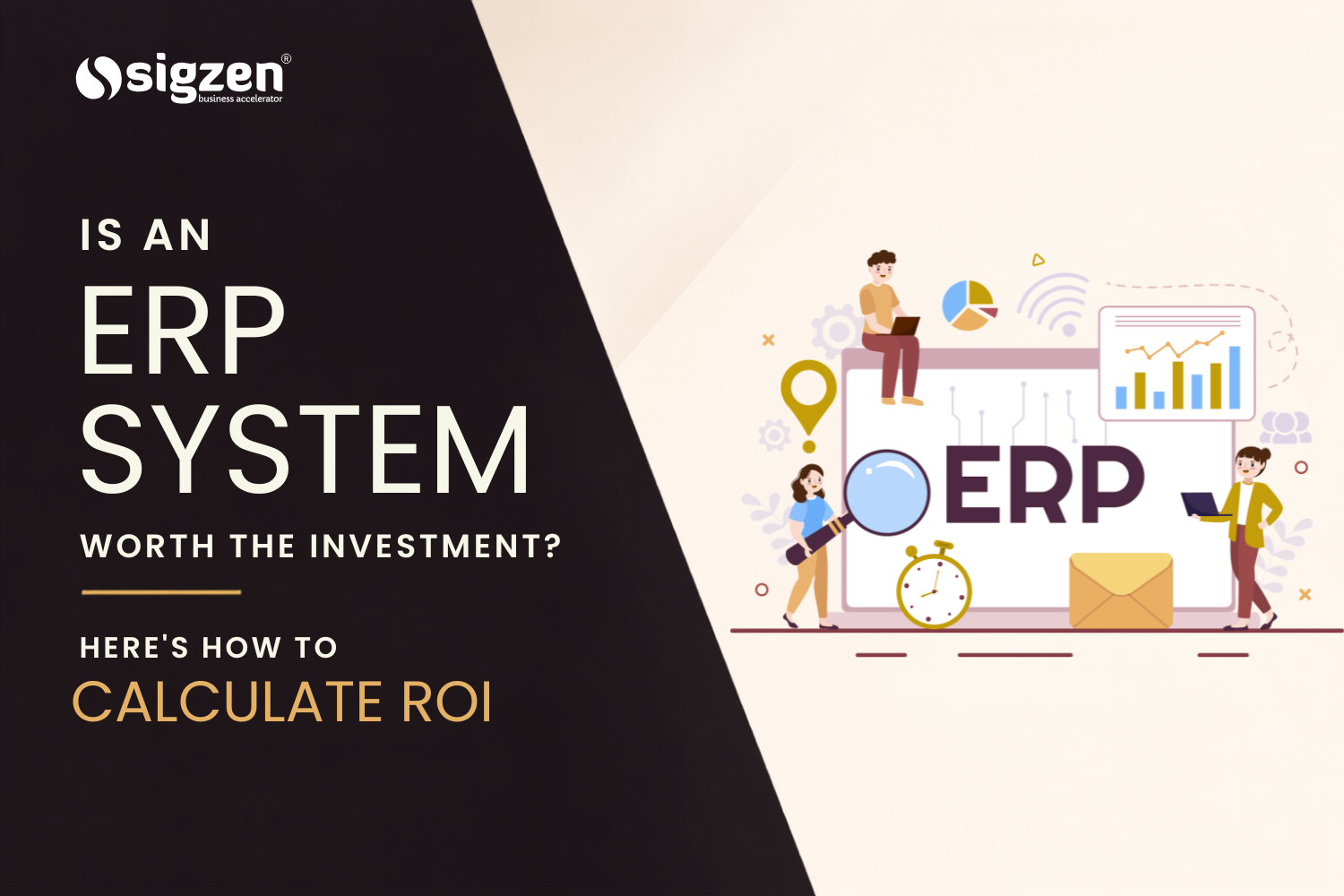
Is an ERP System Really Worth the Investment?
If you're considering an ERP system, you've probably asked yourself one simple question: "Is it really worth the investment?"
It's a fair question. Implementing an ERP isn't just about buying new software. It involves implementation costs, employee training, process changes, and the time it takes for teams to adapt. For many businesses, it's one of the biggest technology investments they'll make.
The value of an ERP is not measured by what you spend on it. It is measured by what you get back. A well-implemented ERP reduces manual work, tightens inventory control, speeds up daily operations, and gives teams accurate information without waiting for someone to compile a report. Over time those changes show up as lower costs and better decisions.
But here's the challenge: not every ERP implementation delivers the same results. Two businesses may invest a similar amount, yet one sees measurable improvements while the other struggles to justify the cost. The difference often comes down to factors like implementation, user adoption, business processes, and how effectively the ERP is used after go-live.
That's why calculating ERP ROI (Return on Investment) is so important. Instead of guessing whether the investment will pay off, you can estimate the potential costs, expected savings, and long-term business value before deciding.
What Is ERP ROI?
ERP ROI (Return on Investment) is a way to measure whether the money you invest in an ERP system is generating real business value. In simple terms, it compares what you spend on your ERP with the benefits your business gains over time.
Those benefits can be financial, such as lower operational costs and reduced inventory expenses, or operational, such as faster processes, improved productivity, better reporting, and fewer manual errors.
Think of it this way: buying an ERP system is an investment, not just an expense. Like any investment, you want to know whether the returns justify the cost. That's exactly what ERP ROI helps you evaluate.
Instead of asking "How much will an ERP cost?", a better question is:
"How much value will this ERP create for my business over the next few years?"
That's the purpose of calculating ERP ROI. It helps business leaders make informed decisions, compare ERP options, build a stronger business case, and set realistic expectations before implementation begins.
ERP ROI isn't just about saving money
A common misconception is that ERP ROI is only measured through cost savings. While reducing expenses is important, a successful ERP also creates value by:
- Improving employee productivity.
- Reducing manual work and repetitive tasks.
- Providing real-time business insights.
- Improving inventory and resource utilization.
- Supporting better and faster decision-making.
- Creating a foundation for future business growth.
When these benefits are measured alongside the total ERP investment, businesses get a much clearer picture of the return they can expect from their ERP implementation.
Why Calculating ERP ROI Before Implementation Is Important
Many businesses evaluate an ERP system based on its features, pricing, or implementation timeline. While these factors matter, they don't answer the most important question: Will this investment deliver enough value for the business?
Calculating ERP ROI before implementation helps you make decisions based on expected business outcomes rather than assumptions. It gives you a clearer picture of the costs involved, the potential savings, and how long it may take to recover your investment.
Here are some of the biggest reasons why calculating ERP ROI early is important:
- Build a stronger business case: Demonstrate the financial and operational value of the ERP to stakeholders and decision-makers.
- Plan your budget more accurately: Consider implementation, training, customization, support, and ongoing operational costs instead of focusing only on software pricing.
- Set realistic expectations: Understand when you can expect to see measurable returns instead of assuming immediate results.
- Compare different ERP solutions: Evaluate multiple ERP options based on long-term value, not just upfront costs.
- Identify improvement opportunities: Estimating ROI helps uncover areas where automation, process improvements, or better resource utilization can create the greatest impact.
Calculating ERP ROI isn't about predicting an exact financial outcome. It's about making a more informed investment decision based on realistic expectations, measurable business benefits, and long-term growth.
How to Calculate ERP ROI (With Formula & Example)
Calculating ERP ROI is simpler than many businesses expect. At its core, it's about comparing what you invest in an ERP system with the value it brings back to your business over time. If the benefits generated by the ERP exceed the total investment, the project delivers a positive return on investment.
However, ERP ROI isn't just about the software cost. To get a realistic picture, you need to consider every major expense involved in implementation and compare it with the financial and operational improvements the ERP is expected to deliver. Looking at only one side of the equation can lead to an inaccurate ROI estimate.
ERP ROI Formula
ERP ROI (%) = ((Total Benefits − Total ERP Investment) ÷ Total ERP Investment) × 100
The formula may look technical, but it's built on two simple components: your investment and your returns.
Understanding the Two Components
1. Total ERP Investment
This includes everything your business spends to implement and maintain the ERP system. Apart from the software itself, you should also include implementation services, data migration, customization, employee training, integrations, and ongoing support. These costs together represent the complete investment, not just the purchase price.
2. Total ERP Benefits
The returns are the measurable improvements to your business experiences after implementing the ERP. These may include lower operating costs, fewer manual tasks, improved productivity, better inventory management, faster order processing, and more accurate business reporting. While some benefits can be measured directly in financial terms, others contribute by improving efficiency and helping teams make better decisions.
A worked ERP ROI example
Take a mid-size manufacturer running Tally alongside a set of spreadsheets, moving to ERPNext with an implementation partner. Around 60 users across production, stores, purchase, sales and accounts.
The figures below are illustrative. They are meant to show the shape of the calculation, not to serve as a quote.
What the business invests
| Cost Item | Amount |
|---|---|
| Implementation, configuration, data migration, and employee training (one-time) | ₹12,00,000 |
| Hosting, support, and Annual Maintenance Contract (AMC) (per year) | ₹2,40,000 |
What the business expects to gain at full realization
₹15,00,000 per year, from reduced inventory carrying cost, lower wastage, less manual reconciliation and faster order processing.
The part most models skip: the ramp
Benefits do not start on day one. People are still learning the system, master data is still being corrected, and half the team is checking the ERP against the old spreadsheet before trusting it.
A realistic model phases the benefit in: 40% in year one, 80% in year two, full value from year three.
Leaving the ramp out is the single most common reason an approved ERP business case falls apart six months later. The forecast promised year-one savings that the system was never going to produce that early.
| Year 1 | Year 2 | Year 3 | |
|---|---|---|---|
| Benefit realised | ₹6,00,000 | ₹12,00,000 | ₹15,00,000 |
| Cumulative benefit | ₹6,00,000 | ₹18,00,000 | ₹33,00,000 |
| Cumulative cost | ₹14,40,000 | ₹16,80,000 | ₹19,20,000 |
| Net position | −₹8,40,000 | +₹1,20,000 | +₹13,80,000 |
Payback period: roughly 23 months. The investment turns positive partway through year two.
Three-year ROI: ((₹33,00,000 − ₹19,20,000) ÷ ₹19,20,000) × 100 = 72%
Year one is negative, and that is normal rather than a warning sign. What matters is where the curve crosses and how steep it is afterwards. Because the recurring cost stays flat while realized benefit keeps climbing, the ratio should improve every year the system stays in use.
Run the same model with a seat-based licensed ERP and the recurring row grows instead of holding steady, which pushes the crossover point further out.
What Costs Should Be Included in ERP ROI?
One of the biggest mistakes businesses make when calculating ERP ROI is looking only at the software price. An ERP investment includes much more than purchasing licenses or paying for an implementation partner.
To estimate your ROI accurately, you need to consider every cost involved in implementing, running, and maintaining the ERP system. Missing even a few expenses can lead to an unrealistic ROI calculation and set the wrong expectations from the start.
Here are the main costs you should include:
Initial Implementation Costs
These are the one-time costs required to get your ERP system up and running.
- ERP software or subscription fees
- Implementation and consulting services
- Data migration from existing systems
- Customization and third-party integrations
- Employee training and onboarding
Ongoing Operational Costs
Once the ERP is live, there are recurring costs that should also be part of your ROI calculation.
- Annual support and maintenance
- Software upgrades or cloud hosting fees
- Additional user licenses, if required
- Internal resources for ERP administration
Hidden Costs That Are Easy to Miss
Some costs don't appear in the initial proposal but can still affect the overall investment. Including them gives you a more realistic view of your expected ROI.
- Temporary productivity loss during the transition
- Additional training for new employees
- Process redesign and testing
- Data cleanup before migration
- Change management and user adoption activities
The more accurately you estimate your total ERP investment, the more reliable your ROI calculation will be. A complete picture of your costs helps you make better decisions, avoid surprises during implementation, and set realistic expectations for the returns your ERP system can deliver.
ERP ROI Calculator: Estimate Your ERP Investment Returns
Once you've identified your estimated costs and expected benefits, the next step is putting those numbers together. This is where an ERP ROI calculator becomes useful.
Instead of manually calculating different scenarios, an ERP ROI calculator helps you estimate the potential return on your ERP investment based on the information you provide. While the results are only estimates, they can give you a realistic starting point for evaluating whether the investment makes financial sense.
Most ERP ROI calculators require a few key inputs, such as:
- Total ERP implementation cost
- Annual operational cost savings
- Estimated productivity improvements
- Ongoing maintenance or subscription costs
- Expected evaluation period (for example, 3 or 5 years)
Based on these inputs, the calculator can estimate metrics such as:
- Estimated ROI (%)
- Payback period
- Total projected savings
- Net financial benefit over time
It's important to remember that an ERP ROI calculator is a decision-support tool, not a guarantee of future results. The actual ROI depends on several factors, including implementation quality, employee adoption, business process improvements, and how effectively the ERP is used across the organization.
The more accurate your assumptions, the more meaningful your ROI estimate will be. That's why it's worth taking the time to gather realistic cost and benefit estimates before making your calculations.
Factors That Have the Biggest Impact on ERP ROI
Two businesses can invest in the same ERP system and spend a similar amount on implementation yet achieve completely different results. That's because ERP ROI isn't determined by the software alone, it's influenced by how the ERP is planned, implemented, and used across the organization.
Here are some of the biggest factors that can affect your ERP ROI:
User Adoption
Even the best ERP system won't deliver value if employees don't use it consistently. Proper training, clear communication, and ongoing support play a major role in improving user adoption and maximizing ROI.
Implementation Approach
A well-planned implementation helps reduce delays, unexpected costs, and operational disruptions. Clear project planning and realistic timelines often lead to better long-term returns.
Business Process Optimization
Implementing an ERP without improving existing processes can limit its benefits. Reviewing and optimizing workflows before implementation helps businesses get more value from the system.
Data Quality
An ERP relies on accurate data to generate reliable reports and insights. Clean and well-organized data reduces errors and supports better business decisions.
Employee Training
Training shouldn't end after go-live. Continuous learning helps employees use more features, follow standardized processes, and work more efficiently over time.
Customization Strategy
Customizing an ERP for essential business needs is often beneficial. However, excessive customization can increase implementation costs, complicate future upgrades, and reduce overall ROI.
The more attention businesses give to these factors, the more likely they are to achieve a faster return on investment and long-term value from their ERP system.
How to Maximize ERP ROI
Achieving a strong return on your ERP investment doesn't happen by chance. It requires careful planning, continuous improvement, and a focus on both technology and people. While every business is different, there are a few practices that consistently help organizations get more value from their ERP system.
Set Clear Goals from the Start
Before implementation begins, define what success looks like. Whether your goal is reducing operational costs, improving inventory accuracy, or increasing productivity, having measurable objectives makes it easier to track your ERP's impact over time.
Focus on User Adoption
An ERP delivers value only when employees use it consistently. Investing in role-based training, ongoing support, and clear communication helps teams adopt the system with confidence and use it effectively in their daily work.
Review and Improve Business Processes
An ERP shouldn't simply replace old ways of working. Use the implementation as an opportunity to simplify workflows, remove unnecessary steps, and standardize processes across departments.
Monitor KPIs Regularly
Track key performance indicators (KPIs) such as inventory turnover, order processing time, production efficiency, and operating costs. Measuring these metrics regularly helps you understand whether your ERP is delivering the expected results and where improvements are needed.
Keep Optimizing After Go-Live
ERP implementation isn't the finish line, it's the beginning of continuous improvement. Gather user feedback, review system performance, and make incremental improvements to ensure your ERP continues to support your business as it grows.
Maximizing ERP ROI is an ongoing process rather than a one-time effort. Businesses that regularly review their processes, support their users, and measure performance are more likely to see lasting returns from their ERP investment.
Why ERP ROI Starts Before Go-Live
ERP ROI doesn't start when the system goes live. It starts much earlier, with decisions around business processes, implementation scope, data, user training, and the goals the ERP is expected to achieve.
This is also how Sigzen approaches ERP implementations. The focus is not only on getting the ERP up and running, but on understanding how the business currently works, where improvements are needed, and how employees will actually use the system in their day-to-day work.
This matters because an ERP can have all the right features and still deliver limited returns if the implementation doesn't address the way the business operates. A clear implementation plan, realistic expectations, good data, and strong user adoption all have a direct effect on how quickly the investment starts generating value.
For businesses evaluating ERP, the key takeaway is simple: ROI should be considered before implementation, not calculated only after it is over.
Planning an ERP investment?\ If you're evaluating ERP and want to understand the expected costs, benefits, and potential ROI for your business, let's connect.
Frequently asked questions
What is ERP ROI?
ERP ROI (Return on Investment) measures the value a business gains from an ERP system compared to the total cost of implementing and maintaining it. It helps organizations understand whether their ERP investment delivers measurable financial and operational benefits over time.
How do you calculate ERP ROI?
ERP ROI is calculated by comparing the total benefits generated by the ERP system with the total investment required to implement and maintain it. Formula: ERP ROI (%) = ((Total Benefits − Total ERP Investment) ÷ Total ERP Investment) × 100 The benefits may include cost savings, productivity improvements, better inventory management, and operational efficiency.
What costs should be included when calculating ERP ROI?
A complete ERP ROI calculation should include all implementation-related costs, such as software licensing, implementation services, customization, data migration, employee training, integrations, ongoing support, and maintenance.
What benefits should be considered when measuring ERP ROI?
ERP ROI should consider both financial and operational benefits. These may include reduced operating costs, improved employee productivity, fewer manual errors, better inventory control, faster business processes, improved reporting, and better decision-making.
How long does it take to see ROI from an ERP system?
Most businesses reach payback between 18 and 30 months, depending on implementation quality and how quickly teams adopt the system. Year one usually shows a negative return because costs are front-loaded while benefits ramp. The signal worth watching is not whether year one is positive, but whether benefit realisation is climbing on schedule.
What factors have the biggest impact on ERP ROI?
User adoption, ahead of everything else. After that: data quality at migration, how much process redesign happened before go-live, and how disciplined the customization scope stayed. Software choice matters less than most evaluations assume, because two businesses running the same system routinely get different results.
Reader rating
How useful was this article? Tap a star to rate.