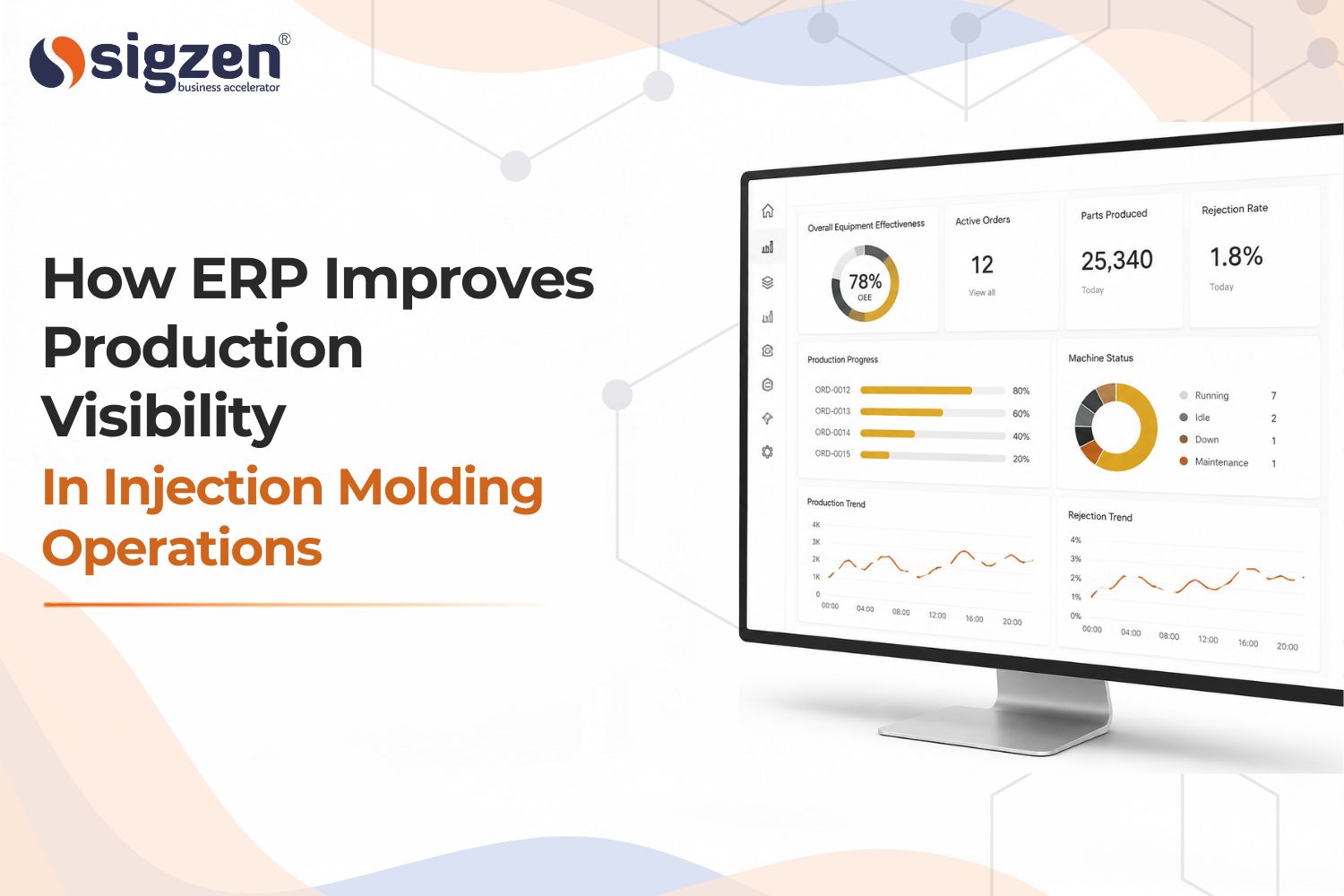
In injection molding manufacturing, staying on top of daily production can be challenging when information is scattered across different systems or updated manually. Production managers need clear visibility into machine performance, work order status, material consumption, and inventory levels to keep operations running efficiently.
This is where ERP for Injection Molding Industry plays an important role. By connecting production planning, inventory management, and quality processes in one system, manufacturers can access accurate information when they need it. An Injection Molding ERP Software solution helps teams monitor production activities, track machine utilization, and respond quickly to issues before they affect delivery schedules.
With better production visibility, manufacturers can reduce delays, improve resource utilization, and make more informed decisions on the shop floor. As competition increases and customer expectations grow, having access to real-time production monitoring has become essential for maintaining efficiency and operational control.
What Does Production Visibility Mean in Injection Molding?
Production visibility is the ability to see and understand what is happening throughout the manufacturing process as it happens. It provides a complete picture of shop floor activities, from raw material movement and mold operations to production output and order completion.
When information is readily available, supervisors can quickly spot bottlenecks, unplanned stoppages, or process deviations that may affect productivity. This level of transparency helps teams coordinate better, maintain consistent output, and keep manufacturing operations aligned with customer requirements. According to a recent manufacturing industry study, facilities lose an average of 30 hours of production every month due to downtime, highlighting the importance of having clear visibility into daily operations and production performance.
For injection molding companies, greater visibility creates a more connected production environment where decisions are based on current operational data rather than assumptions. As a result, manufacturers can improve efficiency, reduce waste, and maintain smoother day-to-day operations.
Common Visibility Challenges in Injection Molding Operations
Many injection molding manufacturers struggle to maintain complete visibility across their production processes. When information is spread across spreadsheets, manual records, and disconnected systems, it becomes difficult to track operations accurately and respond quickly to issues.
Limited Access to Production Information
Production updates are often recorded manually, making it difficult for managers to understand the status of manufacturing activities. Delayed information can lead to slower decision-making and operational inefficiencies.
Unplanned Machine Downtime
Equipment issues can disrupt production schedules and reduce output when they are not identified early. Limited visibility into machine performance makes it harder to address problems before they impact operations.
Material Shortages and Stock Issues
Without accurate inventory information, manufacturers may experience unexpected material shortages during production. This can result in delays, increased costs, and missed delivery commitments.
Difficulty Tracking Work Orders
Managing multiple jobs across different machines and production stages can become challenging without a centralized system. Limited visibility into work order status often creates confusion and production delays.
Inconsistent Quality Monitoring
Quality-related issues may go unnoticed when inspection records and production data are managed separately. This can increase rework, material waste, and customer complaints.
Lack of Accurate Production Reports
Manual reporting processes often provide outdated or incomplete information. Without reliable reports, manufacturers may struggle to evaluate performance and identify areas for improvement.
These challenges can significantly impact productivity, profitability, and customer satisfaction. To overcome them, manufacturers need a system that provides accurate information, improves operational transparency, and supports better decision-making across the production environment.
Key ERP Features That Enhance Production Visibility
Production visibility depends on having access to accurate and timely information across manufacturing operations. ERP systems provide a range of tools that help manufacturers track activities, improve coordination, and maintain better control over production processes.
Production Planning and Scheduling: Helps organize manufacturing activities and align production schedules with customer demand.
Shop Floor Data Collection: Captures operational information directly from the shop floor for better process monitoring.
Inventory Tracking: Provides accurate stock visibility to support material planning and availability.
Work Order Management: Tracks manufacturing jobs from initiation to completion with greater control.
Machine Performance Monitoring: Offers insights into equipment efficiency and operational performance.
Material Requirement Planning (MRP): Calculates material needs to ensure uninterrupted production operations.
Quality Inspection Management: Records of inspection results and helps maintain product quality standards.
Batch Traceability: Enables tracking of materials and finished goods throughout the production lifecycle.
Production Analytics: Converts manufacturing data into actionable insights for performance improvement.
Manufacturing Reports: Generates detailed reports that support operational analysis and decision-making.
Together, these ERP capabilities help create a more connected manufacturing environment where information flows seamlessly across departments. This improves operational visibility, supports faster decision-making, and helps injection molding manufacturers achieve greater efficiency.
Benefits of ERP for Injection Molding Manufacturers
As production demands grow, injection molding manufacturers need better control over operations, resources, and production performance. An ERP system helps improve visibility across manufacturing processes, enabling teams to work more efficiently and make informed decisions.
Improved Production Efficiency
Manufacturers can streamline production activities and reduce delays by having access to accurate operational information. Better coordination between departments helps improve production efficiency and maintain a consistent workflow.
Better Inventory Management
Real-time inventory visibility helps ensure materials are available when needed for production. Effective inventory management reduces stock-related disruptions and supports better material planning.
Reduced Production Downtime
Early visibility into operational issues helps teams address problems before they impact manufacturing schedules. This contributes to lower production downtime and more reliable operations.
Enhanced Product Quality
Integrated quality processes help manufacturers maintain consistent production standards across manufacturing activities. Stronger quality management supports faster identification and resolution of production issues.
More Accurate Production Planning
Access to current production and inventory information helps create realistic schedules and allocate resources effectively. Better production planning helps manufacturers meet delivery commitments with greater confidence.
Improved Resource Utilization
Manufacturers gain better visibility into the use of machines, materials, and workforce capacity. Enhanced resource utilization helps maximize productivity while reducing operational inefficiencies.
Faster Decision-Making
Accurate reports and operational insights provide management with the information needed to respond quickly to changing conditions. Access to manufacturing analytics supports more informed business decisions.
Increased On-Time Deliveries
Better coordination between production, inventory, and scheduling activities helps manufacturers meet customer expectations consistently. Improved order fulfillment contributes to stronger customer satisfaction and business performance.
By strengthening operational visibility, production control, and manufacturing efficiency, ERP helps injection molding manufacturers improve performance and support long-term growth.
How ERPNext Helps Injection Molding Companies Gain Complete Production Visibility
Injection molding manufacturers often face challenges in maintaining complete visibility across production activities. When production data is scattered across spreadsheets, manual records, and disconnected systems, it becomes difficult to monitor operations, identify delays, manage resources, and make informed decisions.
ERPNext brings production planning, inventory management, shop floor operations, quality control, and reporting together within a single platform. This creates a connected manufacturing environment where teams can track production progress in real time and gain better control over daily operations.
Create Accurate Production Plans
ERPNext for injection molding helps manufacturers create production plans based on customer demand, machine capacity, available resources, and material availability. This ensures production schedules are realistic and aligned with delivery commitments.
With centralized ERPNext manufacturing data, teams can reduce dependency on spreadsheets and manual calculations. This makes production planning more accurate and improves coordination between departments.
Better production planning helps minimize scheduling conflicts and resource bottlenecks. Manufacturers can maintain a smoother production flow while improving overall production visibility.
Teams can view upcoming production requirements and prepare machines, materials, and resources in advance. This supports more efficient manufacturing operations and better delivery planning.
Ensure Material Availability Before Production Begins
ERPNext inventory management provides visibility into raw material stock levels, material movements, and consumption. Manufacturers can check material availability before starting production.
Material Requirement Planning (MRP) helps identify future material requirements based on production schedules and demand. This reduces the risk of material shortages interrupting manufacturing activities.
Better inventory visibility helps maintain the right stock levels without unnecessary overstocking. This allows injection molding companies to control inventory costs while supporting continuous production.
By connecting inventory data with production planning, ERPNext for manufacturing helps purchasing and production teams coordinate material requirements more effectively.
Track Work Orders Throughout the Production Cycle
ERPNext allows manufacturers to create, manage, and monitor work orders from initiation to completion. This provides better work order management and reduces dependence on manual production updates.
Managers can view planned quantities, completed quantities, pending activities, and job status from a centralized system. This gives teams greater visibility in production progress.
Real-time work order tracking helps identify production delays before they affect customer delivery schedules. Teams can take corrective action at an earlier stage.
By connecting work orders with other manufacturing activities, an injection molding ERP system can improve coordination between production, inventory, and other departments.
Monitor Shop Floor Activities in Real Time
ERPNext captures production information as manufacturing activities take place on the shop floor. This provides real-time production visibility across different stages of the manufacturing process.
Production teams can monitor work-in-progress, output levels, and job status from a centralized system. Managers can therefore understand what is happening on the shop floor without relying on separate manual records.
Immediate access to production information helps teams identify operational issues and delays faster. This allows them to respond before problems significantly affect production schedules.
Real-time shop floor monitoring strengthens ERPNext manufacturing processes by connecting daily production activities with centralized operational data.
Improve Machine Performance and Resource Utilization
ERPNext for injection molding helps manufacturers monitor machine utilization, production output, and workforce allocation across different operations. This provides better visibility into how production resources are being used.
Manufacturers can identify underutilized machines, idle time, and operational inefficiencies more easily. This information helps teams improve resource allocation and production performance.
Monitoring machine performance can help businesses identify downtime and take corrective action. Better equipment utilization can contribute to more consistent production output.
By combining machine and production information, an injection molding ERP system helps manufacturers understand capacity utilization and improve the use of available resources.
Strengthen Quality Control Processes
ERPNext connects quality management with manufacturing activities, allowing teams to record inspections and quality checks throughout the production process. This provides better visibility to product quality.
Manufacturers can maintain quality records alongside production information. This makes it easier to identify quality trends and maintain consistent manufacturing standards.
Quality issues can be identified earlier and addressed before they result in larger quantities of defective products. This can help reduce rework, waste, and production losses.
Integrated ERPNext quality management also helps maintain centralized inspection records and supports better traceability across production runs.
Identify Production Bottlenecks Faster
ERPNext provides centralized operational data that helps manufacturers identify areas where production is slowing down. This improves production visibility across the manufacturing process.
Managers can identify bottlenecks related to machines, materials, work orders, or production activities. Early identification allows teams to take corrective action more quickly.
Addressing bottlenecks can improve production throughput and reduce unnecessary waiting time. This supports more efficient injection molding operations.
With connected ERPNext manufacturing data, teams can monitor production performance continuously instead of discovering operational problems after delays have already occurred.
Generate Actionable Manufacturing Insights
ERPNext automatically collects manufacturing information and presents it through reports and dashboards. These manufacturing analytics help managers understand production performance more clearly.
Production output, machine utilization, material consumption, quality results, and other operational information can be analyzed from a centralized platform. This reduces the need to combine information from multiple systems.
Real-time reports help managers make informed decisions based on current production conditions. Teams can respond more quickly when performance changes or problems occur.
These ERPNext manufacturing analytics can also help identify opportunities to improve productivity, reduce waste, and optimize production processes.
Enable Complete End-to-End Production Visibility
ERPNext connects production planning, inventory management, work orders, shop floor activities, quality management, and reporting within one system. This creates a unified environment for managing injection molding operations.
Teams no longer need to switch between disconnected tools to understand production status. Centralized information makes it easier to monitor manufacturing activities from planning through completion.
Complete production visibility helps managers identify operational challenges and make faster decisions. It also improves coordination between production, inventory, quality, and management teams.
By using ERPNext for injection molding, manufacturers can gain better control over production performance, improve operational efficiency, and build a more connected manufacturing process.
Best Practices for Implementing ERP in Injection Molding Operations
A successful ERP implementation starts with clearly defined business goals, standardized manufacturing processes, and accurate operational data. Before deployment, manufacturers should identify key performance indicators, establish consistent workflows, and ensure teams are trained to use the system effectively. Regular data reviews and process evaluations also help maximize the value of the ERP investment while supporting continuous operational improvement.
To achieve the best results, it is important to work with an experienced implementation partner who understands the unique requirements of plastic manufacturing and molding operations.
At Sigzen Technologies, we specialize in ERPNext implementation for manufacturing companies, helping injection molding businesses improve production visibility, streamline work order management, optimize inventory control, and enhance quality processes. With ERPNext, manufacturers can make data-driven decisions, improve operational efficiency, and achieve greater control over their production environment.
Conclusion
Clear visibility into manufacturing activities helps injection molding companies respond faster to challenges, improve coordination, and maintain consistent output. By bringing critical business functions together, ERP systems provide the information needed to support smoother workflows and better operational control. For manufacturers looking to improve efficiency and stay competitive, investing in the right technology can create a more connected and responsive production environment. With greater transparency across operations, businesses can make confident decisions and support sustainable growth.
Frequently asked questions
Why is production visibility important in molding?
Production visibility helps manufacturers monitor operations more effectively, identify issues early, and maintain better control over manufacturing activities.
How does ERP support injection molding manufacturers?
ERP connects different business functions such as manufacturing, inventory, purchasing, and quality processes, helping teams access accurate information from a single platform.
Can ERP help reduce manufacturing delays?
Yes, ERP improves operational transparency and helps teams identify scheduling conflicts, material shortages, and process-related issues before they affect production timelines.
How does ERP improve inventory accuracy?
ERP automatically updates inventory records based on business transactions, helping manufacturers maintain accurate stock information and better material control.
What operational data can manufacturers track use ERP?
Manufacturers can track production progress, inventory movement, equipment performance, quality records, and business reports through a centralized system.
Is ERP suitable for small and mid-sized injection molding companies?
Yes, ERP solutions can be scaled to meet the needs of growing manufacturers and support operational improvements at different business sizes.
Reader rating
How useful was this article? Tap a star to rate.