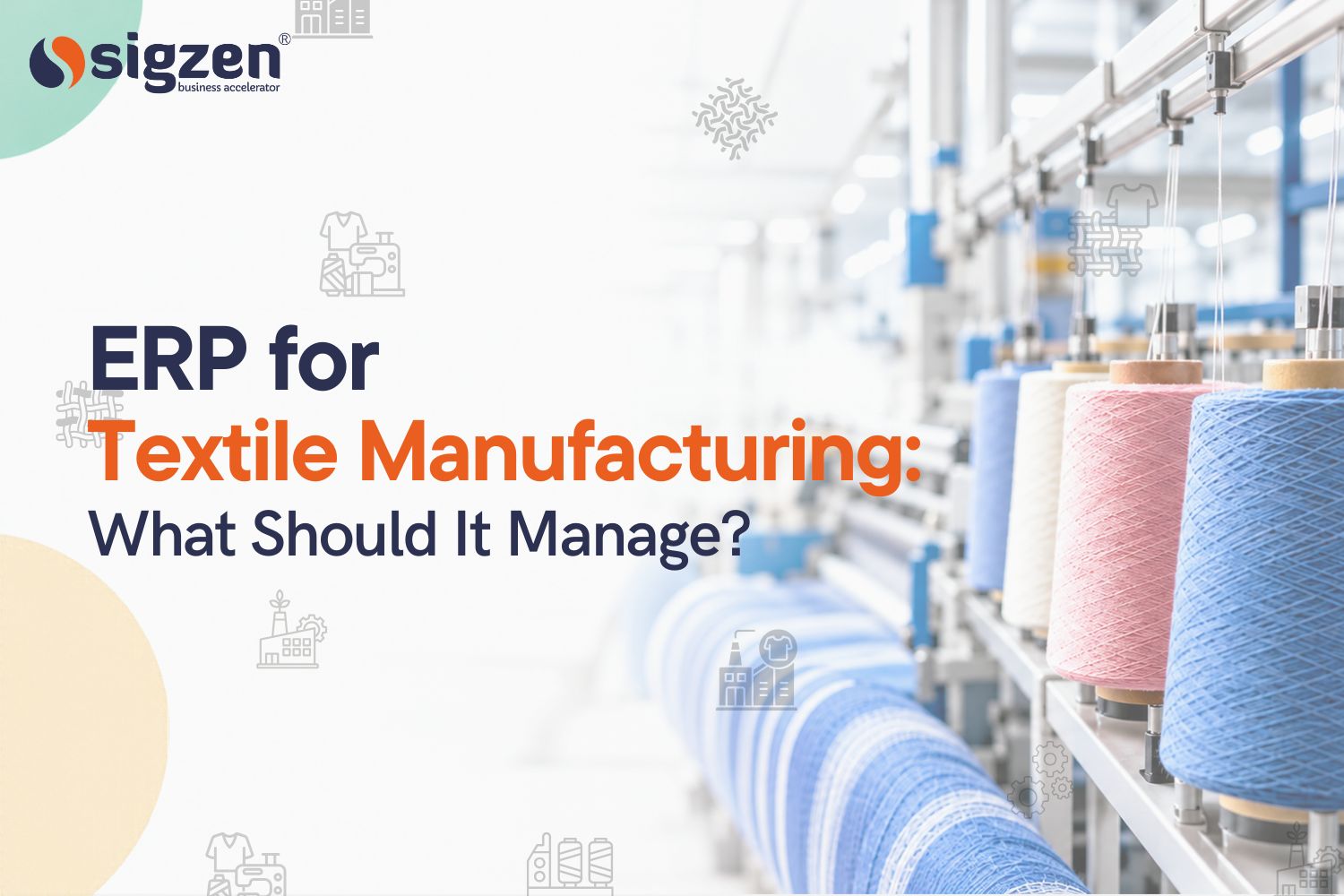
ERP for textile manufacturing should manage raw materials, yarn and fabric inventory, production planning, manufacturing processes, quality checks, job work, purchase orders, sales orders, production costs, and finished goods dispatch.
Textile manufacturers need to track each stage of production to understand how materials are used, where delays occur, and whether orders will be completed on time. Textile ERP software brings these activities together in one system, making it easier to manage daily operations and keep production records organized.
In the textile industry, managing inventory, production, and customer orders separately can lead to material shortages, production delays, and delivery issues. ERP software for the textile industry helps manufacturers track yarn availability, fabric production, quality checks, and finished goods in one system. With the right ERP for textile manufacturing, businesses can monitor material usage, coordinate production activities, maintain quality standards, and control manufacturing costs. It also helps teams track customer orders and delivery schedules, making daily operations easier to manage and improving coordination across departments.
Why Textile Manufacturing Needs ERP Software
Textile manufacturing involves several activities, from purchasing yarn and managing fabric inventory to production, quality checks, and order delivery. Without proper coordination, manufacturers may face material shortages, production delays, quality issues, and difficulty tracking costs.
ERP software for the textile industry helps businesses manage these activities in one system. It gives teams better access to production and inventory information, making daily operations easier to monitor and manage.
Better Control Over Raw Materials and Fabric Stock
Textile ERP software helps manufacturers track yarn, fabric, dyes, chemicals, and other raw materials. Teams can check available stock, record material usage, and plan purchases according to production needs.
Improved Production Planning
Managing multiple production orders can be difficult when machines, materials, and delivery dates need to be coordinated. ERP for textile manufacturing helps organize production schedules and monitor work orders to keep operations on track.
Reduced Production Delays
Missing materials, machine scheduling issues, and incomplete work orders can affect production timelines. Textile manufacturing ERP software helps teams identify pending activities and check production progress before delays affect customer orders.
Consistent Product Quality
Textile manufacturers need to check fabric quality at different stages, including weaving, dyeing, printing, and finishing. ERP software helps record inspection results, track defects, and maintain quality records for better production control.
Clearer Manufacturing Costs
Material consumption, labour, processing, and subcontracting expenses all contribute to textile production costs. An ERP system helps manufacturers maintain cost records and compare actual expenses with planned production costs.
Easier Order and Delivery Management
Textile businesses often handle multiple customer orders with different specifications, quantities, and delivery dates. ERP software connects sales orders with production and finished goods inventory, helping teams check order status and prepare dispatches on time.
Better Coordination Between Departments
Production, purchasing, inventory, sales, and accounts teams depend on information from one another. ERP for textile manufacturing brings these records together, reducing duplicate data entry and helping departments work with consistent information.
By addressing these challenges, textile ERP software helps manufacturers improve control over materials, production, quality, and deliveries. It also provides a clearer view of daily operations, helping businesses identify problems earlier and make informed decisions as production requirements change.
What Should ERP for Textile Manufacturing Manage?
A textile business handles different activities before a product is ready for delivery. The system should help teams follow materials, production activities, quality requirements, and order progress at every stage.
Before Production: Materials and Purchasing
Before starting a production order, manufacturers need to know whether the required yarn, fabric, dyes, and chemicals are available. The system should connect stock records with purchase requirements, so teams can arrange materials before production begins.
During Production: Planning and Work Orders
From spinning and weaving to dyeing and finishing, each process requires proper scheduling and resource allocation. The system should help teams assign work orders, monitor production progress, and record the materials used at each stage.
At Every Stage: Quality Inspections
Fabric may require checks for color consistency, shrinkage, strength, defects, and finishing quality. The system should maintain inspection records, identify rejected materials, and help teams track issues before products move to the next stage.
Outside the Factory: Job Work and Subcontracting
Some textile manufacturers send materials to outside units for dyeing, printing, embroidery, or other processing work. The system should track materials sent out, quantities received, processing costs, and pending work with each subcontractor.
Before Dispatch: Finished Goods and Customer Orders
Once production is complete, teams need to verify finished quantities, customer specifications, packaging requirements, and delivery dates. The system should connect completed production with sales orders and dispatch records to help prevent incorrect or delayed deliveries.
Across All Operations: Costing and Production Records
Manufacturers need to understand the cost of materials, labour, machine operations, and outside processing. The system should maintain production records and help compare estimated costs with actual expenses for each order or batch.
Managing these stages in a connected system helps textile businesses understand what is happening on the production floor and what still needs attention. It also makes it easier to trace materials, review order progress, and plan upcoming work based on available resources.
ERPNext helps textile businesses organize production, inventory, purchasing, and order records through connected business modules. Its features can support several day-to-day activities in textile manufacturing.
How ERPNext Connects Textile Manufacturing Operations
Textile manufacturing involves several connected activities, including raw material purchasing, inventory management, production planning, quality inspections, and finished goods dispatch. When these activities are managed separately, teams may struggle to track material availability, monitor production progress, and meet customer delivery dates. ERP software connects these operations and helps departments work with the same information.
For example, when a fabric order is confirmed, the purchasing team can check yarn and other material requirements, while the production team plans the required work. As the order moves through weaving, dyeing, and finishing, teams can update production records, track material consumption, and record quality inspection results. The warehouse can then prepare finished goods for dispatch based on the completed quantities.
ERPNext supports these connected activities through its manufacturing, inventory, purchasing, sales, and quality management features. Textile manufacturers can use these features to manage day-to-day operations:
- Material and Inventory Management: Maintain stock records for yarn, fabric, dyes, chemicals, and finished goods across warehouses.
- Production Planning and Work Orders: Plan manufacturing activities, track work orders, and record material consumption during production.
- Bill of Materials (BOM): Define the materials and quantities required to manufacture a product.
- Quality Inspections: Record inspection results for incoming materials and finished products to help maintain quality standards.
- Subcontracting Management: Track materials sent to outside processors for activities such as dyeing, printing, or other specialized work.
- Purchasing and Supplier Management: Maintain supplier records, manage purchase orders, and track incoming materials.
- Manufacturing Cost Tracking: Review recorded material costs and other production expenses to understand manufacturing costs.
- Sales Orders and Delivery: Connect customer orders with stock availability, production requirements, and delivery records.
By connecting these functions, ERPNext helps textile businesses maintain organized records and improve coordination between departments. Teams can review production progress, identify material shortages, monitor order status, and plan upcoming activities using updated information.
However, textile manufacturers may have specific requirements for fabric variations, dyeing processes, batch tracking, or production calculations. These workflows may require additional configuration or customization to match the business's operations.
What to Check Before Choosing Textile ERP Software
Before choosing textile ERP software, businesses should check whether it supports their production processes, from yarn and fabric inventory to weaving, dyeing, finishing, and order delivery. It is also important to review features such as batch tracking, quality inspections, subcontracting, production costing, and inventory reports. The system should be easy for employees to use and flexible enough to match the company's workflows as its requirements change. Integration with purchasing, sales, and accounting can also help teams manage information without maintaining separate records.
Conclusion: Managing Textile Production with the Right ERP
Managing textile manufacturing requires proper coordination between materials, production, quality checks, costing, and customer orders. The right system helps businesses keep these activities connected, track production progress, and maintain accurate records across departments. Before selecting a solution, manufacturers should consider their production processes, inventory requirements, and reporting needs.
ERPNext offers features for managing manufacturing, stock, purchasing, and sales, which can be configured to support different business requirements. If you are planning to improve your textile operations, contact Sigzen Technologies to discuss your requirements and explore how ERPNext can fit your manufacturing workflows.
Frequently asked questions
What is ERP for textile manufacturing?
ERP for textile manufacturing is a business management system that connects activities such as inventory, production planning, purchasing, quality checks, costing, and order management.
What features should textile ERP software include?
It should support material tracking, production scheduling, quality inspections, subcontracting, purchase management, production costing, and finished goods dispatch.
Can ERP software manage yarn and fabric inventory?
Yes, inventory features can track yarn, fabric, dyes, chemicals, and finished goods, including stock quantities, warehouse locations, and material movements.
How does ERP software help with textile production planning?
It helps manufacturers organize work orders, check material availability, schedule production activities, and monitor progress against production requirements.
Can ERPNext be used for textile manufacturing?
ERPNext includes manufacturing, inventory, purchasing, sales, and quality management features. Textile businesses may need configuration or customization to support specific processes, such as fabric variations, dyeing, and specialized production tracking.
Reader rating
How useful was this article? Tap a star to rate.