Introduction
Manufacturing companies need better control over production processes, raw materials, and stock levels to keep operations running smoothly. Managing production schedules, tracking inventory, and maintaining accurate records can become difficult when information is spread across different systems. This is where ERPNext for manufacturing helps businesses manage daily operations from a single platform.
ERPNext connects manufacturing, inventory, purchasing, and reporting processes in one system. With ERPNext inventory management, businesses can monitor stock movements, manage warehouses, track batch numbers, and maintain accurate inventory records. This helps ensure that the right materials are available when production requires them.
By combining production planning, inventory control, and reporting, Manufacturing ERP software helps manufacturers improve operational visibility and make informed decisions.
What Is ERPNext for Manufacturing?
ERPNext is an open-source ERP system that helps manufacturers manage production, inventory, purchasing, sales, and reporting from a single platform. Instead of using separate tools for different tasks, businesses can connect their operations and keep information updated across departments. ERPNext for manufacturing helps companies organize production activities, track materials, and monitor inventory levels more effectively.
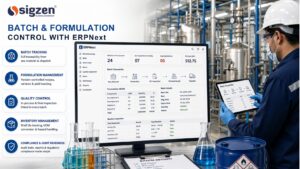
Let’s take a quick look at the key ERPNext manufacturing features that support production, inventory, and operational management.
Why Do Manufacturers Prefer ERPNext for Managing Operations?
Manufacturers choose ERPNext because it connects production, inventory, purchasing, and reporting in one system. This reduces the need for manual data entry and improves visibility across operations. With Production management ERPNext, teams can track work orders, monitor production progress, and manage resources more efficiently.
Another reason businesses prefer ERPNext is its flexibility and ease of use. As a Manufacturing ERP software, it can support different types of manufacturing industries while providing real-time information for production and inventory management. This helps businesses improve planning, maintain stock accuracy, and make better operational decisions.
ERPNext Manufacturing Features
ERPNext includes features designed to support daily manufacturing operations. Businesses can create and manage Bills of Materials (BOMs), generate work orders, plan production schedules, and track the progress of manufacturing activities. With ERPNext production planning, manufacturers can estimate material requirements, schedule jobs, and ensure resources are available when needed.
The system also offers strong inventory capabilities. Using ERPNext inventory management, businesses can track stock across multiple warehouses, monitor stock movements, manage batch and serial numbers, and automate replenishment processes. These features help maintain accurate inventory records and support smooth production workflows.
Now, let’s look at some of the common production and inventory challenges manufacturers face in their daily operations.
Common Production and Inventory Challenges Manufacturers Face
Manufacturers often face several challenges while managing production processes and inventory levels. Industry data shows that the average inventory accuracy rate across businesses is only 83%, while inventory distortion caused by stock shortages, overstocking, and shrinkage costs businesses an estimated $1.6 trillion globally each year.
In addition, studies indicate that 60% of manufacturers report inaccurate demand forecasting as a major cause of excess inventory and stock-related issues. These challenges can affect operational efficiency, increase costs, and create delays across the manufacturing cycle.
Now, let’s explore these common manufacturing challenges in more detail.
Production Delays
Production delays can occur when materials are unavailable; machines are not scheduled properly, or work orders are not tracked effectively. Without proper planning, businesses may struggle to meet delivery timelines. ERPNext production scheduling helps manufacturers organize and monitor production activities more efficiently.
Inventory Shortages
Inventory shortages can stop production and delay customer orders. When stock levels are not monitored regularly, manufacturers may run out of critical raw materials. ERPNext stock management helps businesses maintain the right inventory levels for uninterrupted production.
Excess Inventory and Overstocking
Keeping too much inventory increases storage costs and ties up working capital. Overstocking can also lead to material damage, expiry, or waste. ERPNext inventory control helps manufacturers track stock accurately and reduce unnecessary inventory buildup.
Lack of Real-Time Visibility
Many manufacturers struggle to see the status of production orders, inventory levels, and material usage. This can make planning and decision-making difficult. ERPNext manufacturing software provides visibility across production and inventory operations from a single system.
Manual Data Entry and Errors
Using spreadsheets and manual records can result in incorrect stock counts, duplicate entries, and reporting mistakes. These errors can affect production planning and inventory accuracy. ERPNext warehouse management helps businesses maintain accurate records through automated data tracking.
Poor Demand and Material Planning
Manufacturers often find it difficult to estimate future material requirements based on production demand. Poor planning can lead to stock shortages or excess inventory. ERPNext material requirement planning helps businesses plan raw materials according to production needs.
Inefficient Warehouse Management
Managing inventory across multiple warehouses can become complex without proper tracking systems. Incorrect stock information may lead to delays in production and order fulfillment. ERPNext warehouse tracking helps businesses monitor inventory movement across different storage locations.
Limited Reporting and Analysis
Without accurate reports, manufacturers may struggle to identify production issues, inventory trends, and operational inefficiencies. Delayed reporting can impact business decisions. ERPNext manufacturing reports provide detailed insights into production performance and inventory management.
Let’s explore how ERPNext production management helps businesses improve planning, streamline manufacturing processes, and gain better control over daily operations.
How ERPNext Improves Inventory Management for Manufacturers
Managing inventory is important for keeping production running smoothly. ERPNext helps manufacturers track stock, manage warehouses, and ensure materials are available when needed.
- Real-Time Inventory Tracking: View current stock levels across warehouses and keep inventory records up to date.
- Multi-Warehouse Management: Manage inventory across multiple warehouse locations from a single platform.
- Automated Stock Replenishment: Set reorder levels to ensure materials are purchased before stock runs low.
- Batch and Serial Number Tracking: Track products and raw materials using batch and serial numbers for better traceability.
- Material Requirement Planning (MRP): Plan material purchases based on production schedules and inventory availability.
- Stock Movement Tracking: Monitor stock transfers, receipts, and material issues to maintain accurate records.
- Inventory Valuation: Track inventory costs and stock values to support financial planning and reporting.
- Warehouse Visibility: Get a clear view of inventory availability, storage locations, and stock usage.
- Reduced Inventory Shortages: Keep essential materials in stock to avoid production delays and interruptions.
- Better Inventory Accuracy: Maintain accurate stock records through automatic inventory updates and tracking.
ERPNext helps manufacturers maintain better control over inventory, improve stock visibility, and ensure materials are available for production. This supports smoother operations, fewer stock-related issues, and more efficient inventory management.
What Is the Role of ERPNext in Connecting Production Planning and Inventory Control?
ERPNext connects production planning and inventory control to help manufacturers maintain smooth operations. By linking material availability with production requirements, businesses can improve planning accuracy and reduce operational delays.
Improved Material Planning
- ERPNext production planning helps manufacturers check material availability before production begins, reducing delays caused by stock shortages.
- ERPNext MRP calculates raw material requirements based on production schedules, helping businesses plan procurement more effectively.
Better Inventory Accuracy
- ERPNext inventory tracking automatically updates stock levels when materials are issued or consumed during production.
- ERPNext stock control helps maintain accurate inventory records and reduces manual data entry errors.
Connected Production and Inventory Processes
- ERPNext work order management links production orders directly with inventory data for better operational coordination.
- ERPNext manufacturing software provides visibility into both production progress and material availability from one system.
Reduced Stock Issues
- ERPNext warehouse management helps manufacturers maintain optimal inventory levels and reduce excess stock.
- ERPNext manufacturing planning helps prevent material shortages that can interrupt production activities.
Better Purchasing and Cost Control
- ERPNext procurement management helps businesses purchase materials based on actual production demand and inventory levels.
- ERPNext production cost tracking helps monitor material consumption and control manufacturing costs more effectively.
By connecting production planning with inventory control, ERPNext helps manufacturers improve coordination, maintain stock accuracy, and support efficient manufacturing operations.
Why Do Manufacturers Rely on ERPNext Reports and Insights?
Manufacturing businesses generate large amounts of data every day, from production activities and inventory transactions to purchasing, quality inspections, and financial operations. However, collecting data alone is not enough. Businesses need clear and meaningful reports to understand what is happening across their operations and make informed decisions.
Let’s explore the key reporting and insight capabilities available in ERPNext.
Production Reports
ERPNext provides detailed production reports that help manufacturers monitor work orders, production output, completed quantities, and pending operations. These reports help production teams track manufacturing progress and improve production planning.
Inventory Reports
With ERPNext inventory reporting, businesses can monitor stock levels, stock movement, inventory valuation, and warehouse performance. This helps manufacturers maintain accurate inventory records and avoid stock-related issues.
Work Order Tracking
ERPNext allows manufacturers to track work orders from creation to completion. Managers can monitor production status, material consumption, and resource utilization through centralized reporting.
Material Consumption Analysis
Manufacturers can analyze how raw materials are consumed during production processes. This helps identify excessive material usage, reduce wastage, and improve inventory planning.
Warehouse and Stock Movement Reports
ERPNext provides reports on stock transfers, receipts, material issues, and warehouse activities. These reports help businesses maintain better inventory control and improve warehouse management.
Procurement and Purchase Reports
Purchasing teams can monitor supplier performance, purchase orders, pending deliveries, and procurement costs. ERPNext procurement reporting helps improve purchasing decisions and material availability.
Production Cost Analysis
ERPNext helps manufacturers track production costs by analyzing raw material consumption, operational expenses, and manufacturing activities. This provides better visibility into product costs and profitability.
Quality Management Reports
Quality reports help businesses monitor inspection results, quality checks, rejected materials, and corrective actions. This supports consistent product quality and compliance requirements.
Financial Reports for Manufacturing Operations
ERPNext connects manufacturing and financial data to provide reports on expenses, revenue, inventory value, and operational costs. This helps management understand the financial impact of manufacturing activities.
Real-Time Dashboards and KPIs
ERPNext dashboards display important manufacturing metrics such as production output, inventory levels, pending work orders, material availability, and operational performance. These dashboards help managers monitor business activities without waiting for manual reports.
Custom Reports for Business Requirements
Every manufacturing business has different reporting needs. ERPNext allows organizations to create customized reports and dashboards that align with their operational and management requirements.
By providing real-time manufacturing insights and reports, ERPNext helps businesses gain better visibility into production, inventory, procurement, quality, and financial operations. This enables manufacturers to monitor performance, improve operational control, and make more informed business decisions.
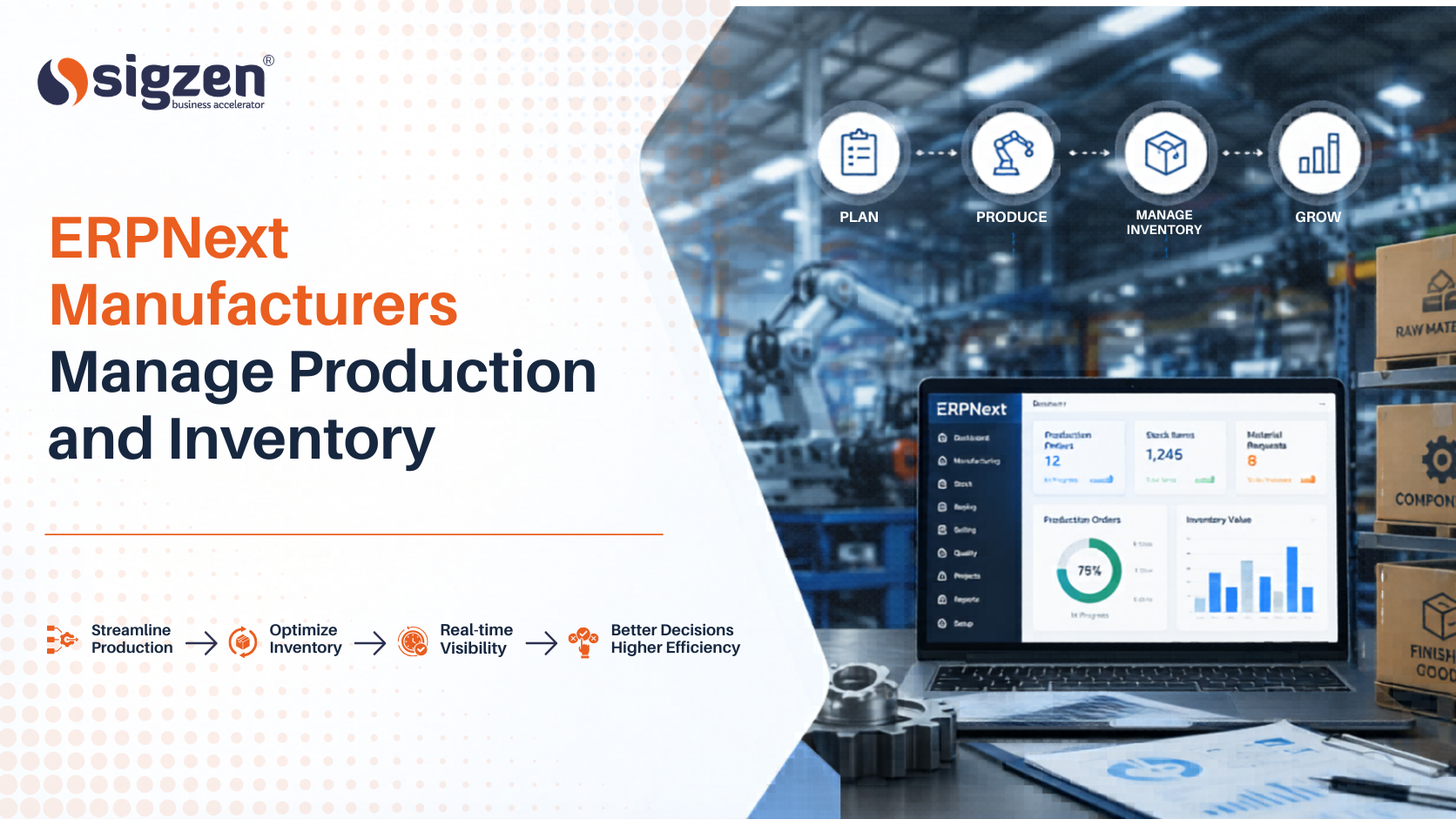
Let’s examine the ERPNext manufacturing process shown below.
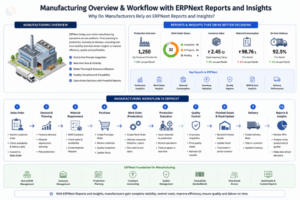
ERPNext transforms manufacturing data into meaningful reports and dashboards, helping businesses monitor production, inventory, quality, and financial performance more effectively.
By providing real-time visibility across operations, ERPNext enables manufacturers to make informed decisions, improve efficiency, and maintain better operational control.
Key Benefits of Using ERPNext in Manufacturing
ERPNext helps manufacturers connect production, inventory, purchasing, quality, and reporting processes in one system. This improves operational control, data accuracy, and overall manufacturing efficiency.
- Improved Production Planning: Helps manufacturers schedule production activities more effectively and ensure resources are available when needed.
- Better Inventory Control: Provides accurate stock visibility to help maintain optimal inventory levels and reduce stock-related issues.
- Reduced Material Wastage:Tracks material usage throughout production to minimize waste and improve resource utilization.
- Faster Production Processes: Streamlines production workflows and reduces delays by connecting manufacturing activities in one system.
- Better Demand and Material Planning: Aligns material purchases with production requirements to improve planning accuracy and material availability.
- Accurate Production Cost Tracking: Monitors raw material, labor, and operational costs to provide better visibility into manufacturing expenses.
- Enhanced Quality Management: Supports quality inspections and process monitoring to help maintain consistent product quality.
- Simplified Reporting and Analysis: Provides real-time reports and dashboards that help manufacturers track performance and make informed decisions.
By bringing production, inventory, reporting, and business processes together, ERPNext helps manufacturers improve efficiency, maintain better control over operations, and support long-term business growth.
Best Practices for Implementing ERPNext in Manufacturing
A successful ERPNext implementation requires proper planning, accurate data, and well-defined processes. Following the right approach helps manufacturers improve production efficiency, inventory accuracy, and overall operational performance.
Now, let’s explore the key best practices for a successful ERPNext implementation in manufacturing
1. Define Clear Business Requirements
Identify production, inventory, procurement, and reporting challenges before implementation. ERPNext manufacturing software can deliver better results when configured according to actual business requirements.
2. Map Existing Manufacturing Processes
Review current workflows for production planning, inventory control, purchasing, and quality management. ERPNext manufacturing management works best when business processes are clearly documented.
3. Maintain Accurate Master Data
Ensure item masters, Bills of Materials (BOMs), suppliers, warehouses, and routing details are accurate before migration. Clean data helps ERPNext production management operate effectively from day one.
4. Standardize Production Workflows
Create consistent procedures for work orders, material issuance, production tracking, and inventory transactions. Standard workflows improve the performance of ERPNext shop floor management.
5. Configure Inventory Management Properly
Set up warehouses, reorder levels, stock locations, and batch tracking correctly. Proper configuration helps ERPNext inventory management maintain accurate stock records.
6. Implement Material Requirement Planning (MRP)
Use MRP to align material purchases with production schedules. ERPNext material requirement planning helps manufacturers reduce shortages and improve material availability.
7. Train Employees Thoroughly
Provide practical training for production teams, warehouse staff, and managers. Proper training helps users understand ERPNext manufacturing ERP processes and improve system adoption.
8. Start with Core Manufacturing Modules
Begin with production, inventory, procurement, and reporting functions before expanding to other areas. This approach helps businesses gain value from ERPNext production planning more quickly.
9. Establish Data Entry Standards
Create guidelines for recording inventory transactions, production updates, and purchasing activities. Consistent data improves the accuracy of ERPNext manufacturing reports.
10. Monitor Reports and KPIs Regularly
Track production output, inventory levels, material consumption, and operational performance through dashboards. ERPNext business reporting helps managers monitor manufacturing activities more effectively.
Why Choose Sigzen for Manufacturing ERPNext Implementation?
Manufacturing businesses require an ERP system that supports production planning, inventory control, procurement, quality management, and reporting within a connected workflow. Sigzen helps manufacturers implement ERPNext for manufacturing based on their operational processes, production requirements, and inventory management needs. Our team works closely with businesses to configure workflows, maintain accurate data, and ensure smooth adoption across departments.
With experience in ERPNext implementation, production management, inventory tracking, warehouse management, and manufacturing reporting, Sigzen helps businesses improve operational visibility and process efficiency. From production planning and material requirement planning (MRP) to inventory management and performance reporting, we help manufacturers build a system that supports daily operations and long-term growth.
If your organization is looking to improve production control, maintain accurate inventory records, and streamline manufacturing processes, connect with Sigzen Technologies to understand how ERPNext manufacturing software can support your business requirements and operational goals.
Conclusion
Managing production, inventory, and reporting separately can make manufacturing operations more difficult than they need to be. ERPNext brings these functions together in one system, making it easier to plan production, track inventory, manage work orders, and monitor business performance.
With features such as ERPNext production planning, inventory management, material requirement planning (MRP), and manufacturing reports, businesses can stay organized and keep daily operations running smoothly. By connecting production and inventory processes, ERPNext helps manufacturers reduce stock issues, improve visibility, and make better decisions based on accurate data.
Frequently Asked Questions
1. How does ERPNext help manufacturers manage production?
ERPNext helps manufacturers plan production schedules, create work orders, manage Bills of Materials (BOMs), and track production activities from a single platform.
2. How does ERPNext improve inventory management?
ERPNext inventory management helps businesses track stock levels, monitor inventory movements, manage warehouses, and maintain accurate inventory records.
3. What is Material Requirement Planning (MRP) in ERPNext?
ERPNext MRP helps manufacturers calculate raw material requirements based on production plans, ensuring materials are available when needed.
4. How does ERPNext connect production planning and inventory control?
ERPNext links production schedules with inventory availability, helping manufacturers reduce material shortages and improve production efficiency.
5. What types of manufacturing reports are available in ERPNext?
ERPNext provides production reports, inventory reports, stock movement reports, work order reports, material consumption reports, and operational dashboards.
6. Is ERPNext suitable for small and medium-sized manufacturers?
Yes. ERPNext for manufacturing is suitable for small and medium-sized businesses looking to manage production, inventory, procurement, and reporting within a single system.