
Manage yarn procurement, production planning, weaving, dyeing, inventory, quality control, subcontracting, warehouse operations, and financial workflows through a centralized ERPNext platform designed for textile manufacturers. Improve production visibility, reduce operational delays, track inventory accurately, and connect every department through a unified textile ERP system built for growing manufacturing businesses.
Why Textile Businesses Need an Industry-Specific ERP System
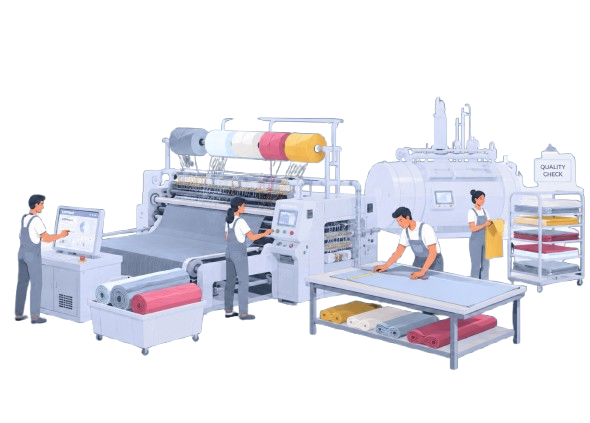
Textile manufacturing involves complex processes such as production planning, inventory management, quality control, and subcontracting. Without a centralized ERP system, businesses often face operational delays, inventory inaccuracies, and limited production visibility.
Textile Industry Segments
ERP for Spinning Mills
Manage yarn production, raw material consumption, machine utilization, inventory movement, and production planning with centralized ERP workflows designed for spinning operations.
ERP for Weaving Industry
Track loom production, yarn allocation, grey fabric inventory, production schedules, and order management with real-time operational visibility.
ERP for Dyeing & Processing Units
Streamline dye lot tracking, chemical inventory, batch processing, quality inspections, subcontracting workflows, and dispatch coordination.
ERP for Garment Manufacturing
Manage stitching operations, trims inventory, production lines, quality control, subcontracting, and finished goods dispatch from a single ERP platform.
ERP for Textile Processing Industry
Monitor fabric processing workflows including bleaching, printing, finishing, coating, and packaging while improving production tracking and inventory accuracy.
ERP for Textile Trading Businesses
Centralize inventory management, quotations, order tracking, warehouse operations, dispatch planning, and financial reporting for textile wholesalers and traders.
Key Features & Benefits of Textile ERP Software
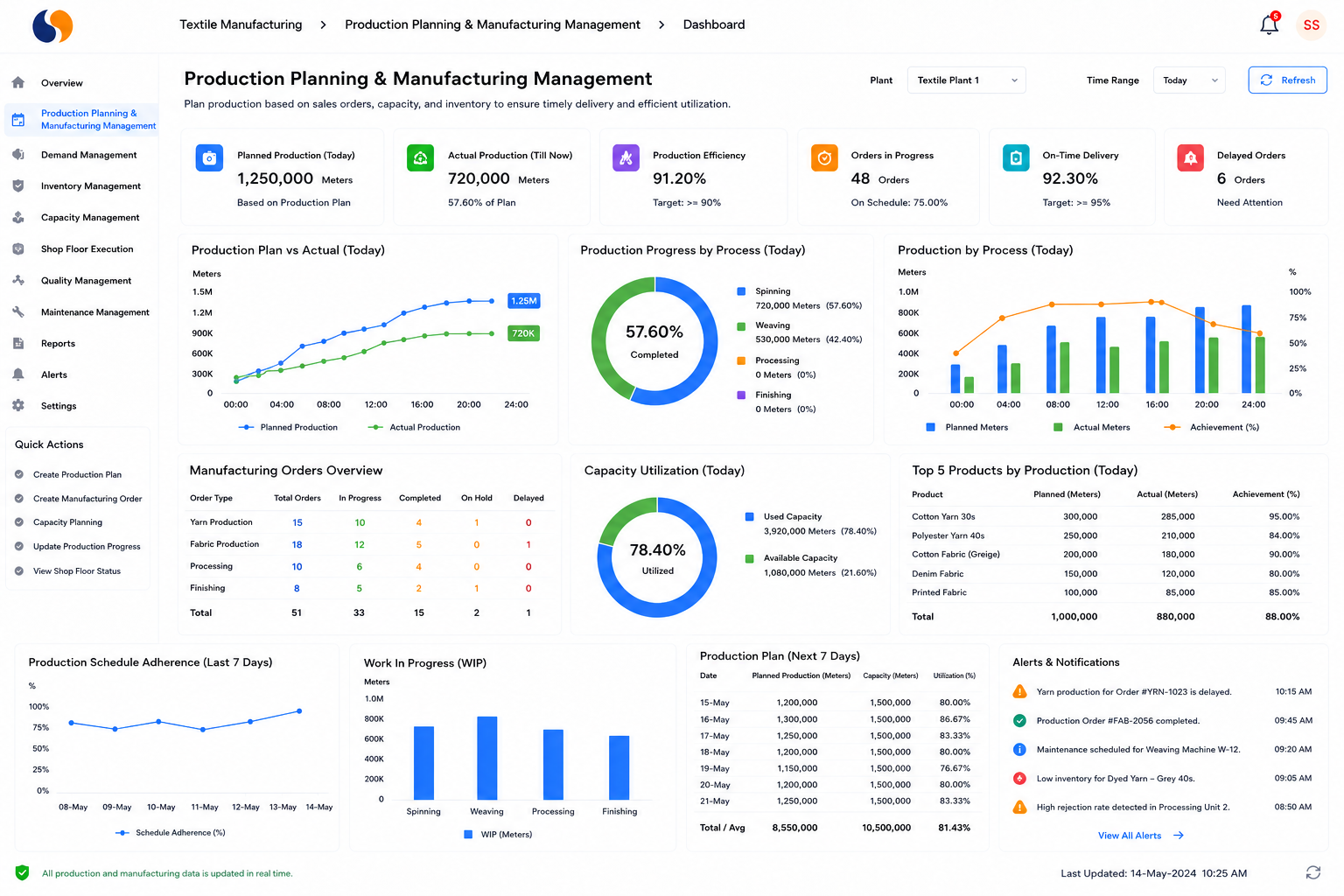

1. Production Planning & Manufacturing Management
ERPNext helps textile manufacturers manage spinning, weaving, dyeing, processing, stitching, and finishing operations through centralized production workflows. Production teams can create work orders, schedule manufacturing activities, allocate raw materials, monitor machine utilization, and track work-in-progress inventory in real time.
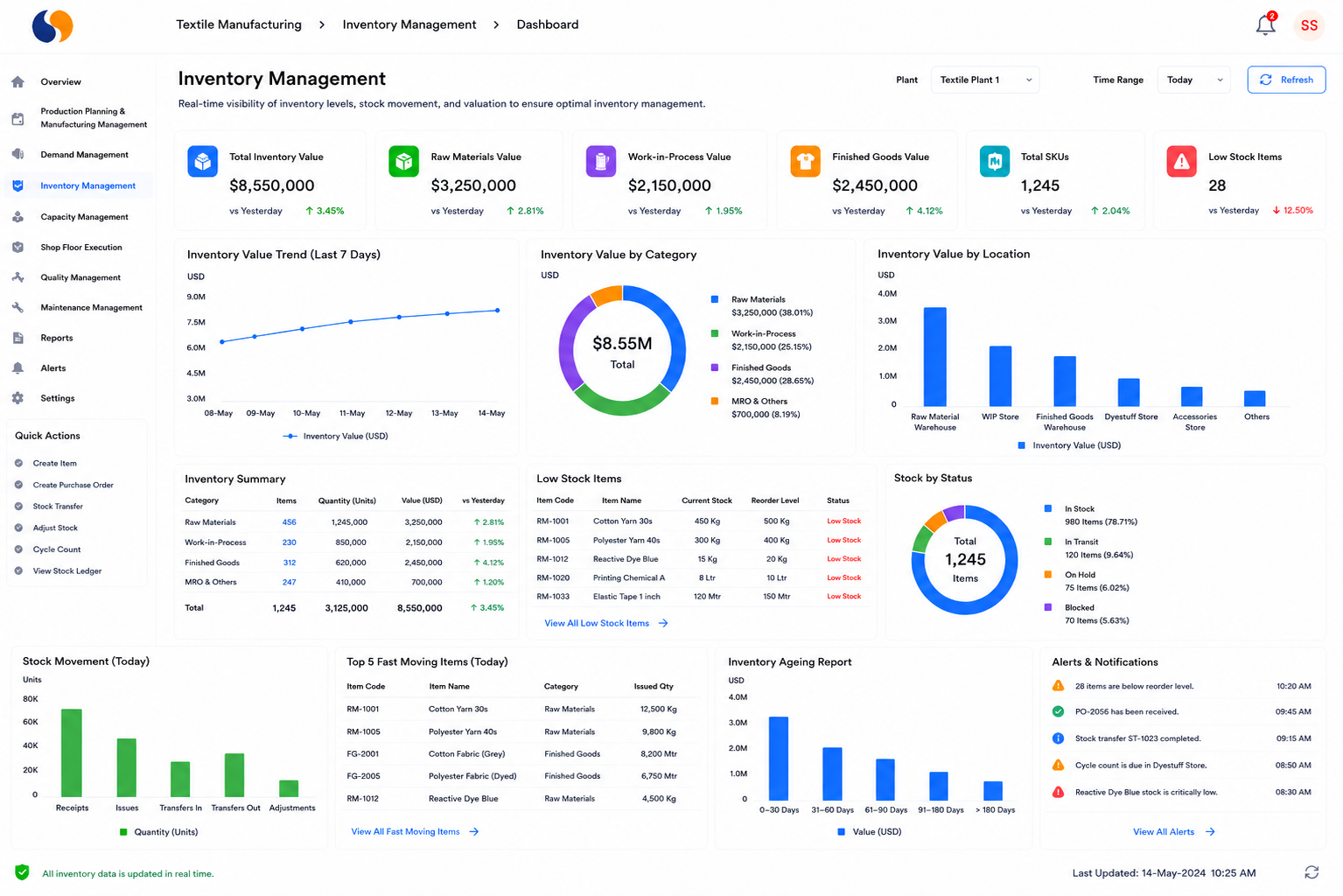
2. Textile Inventory Management
ERPNext provides centralized inventory management for yarn, fabric, dyes, chemicals, trims, accessories, and finished goods across multiple warehouses and production units. The system helps businesses monitor stock levels, track material movement, manage reorder planning, and maintain inventory accuracy throughout the manufacturing cycle. This reduces stock mismatches, improves material availability, and supports better production planning.
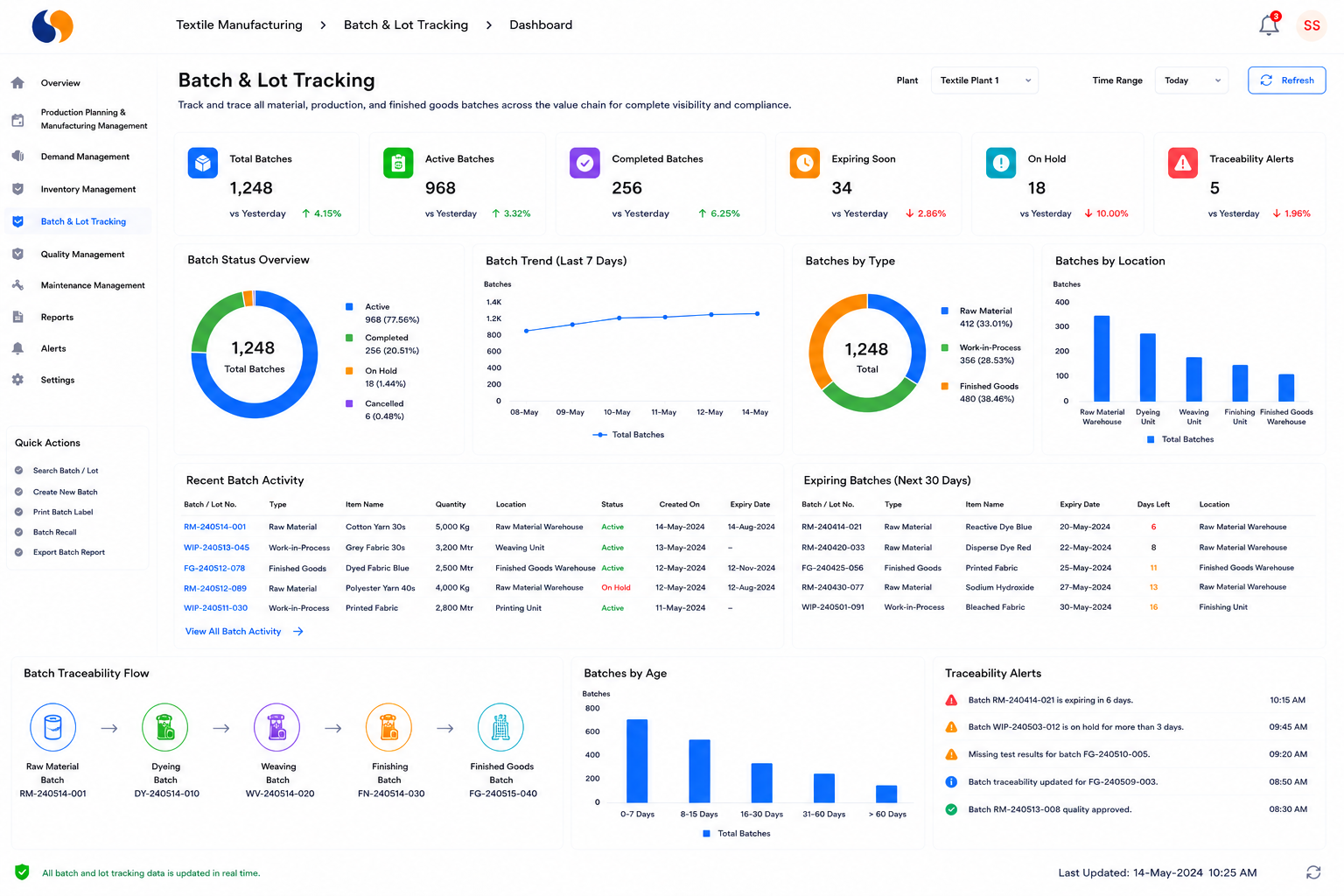
3. Batch & Lot Tracking
ERPNext enables textile businesses to track yarn lots, dye batches, fabric rolls, and processed materials throughout production and warehouse operations. Businesses can maintain complete traceability for raw materials and finished products while linking inventory records with quality inspections and supplier details. This improves quality control, reduces production errors, and helps maintain operational accountability.
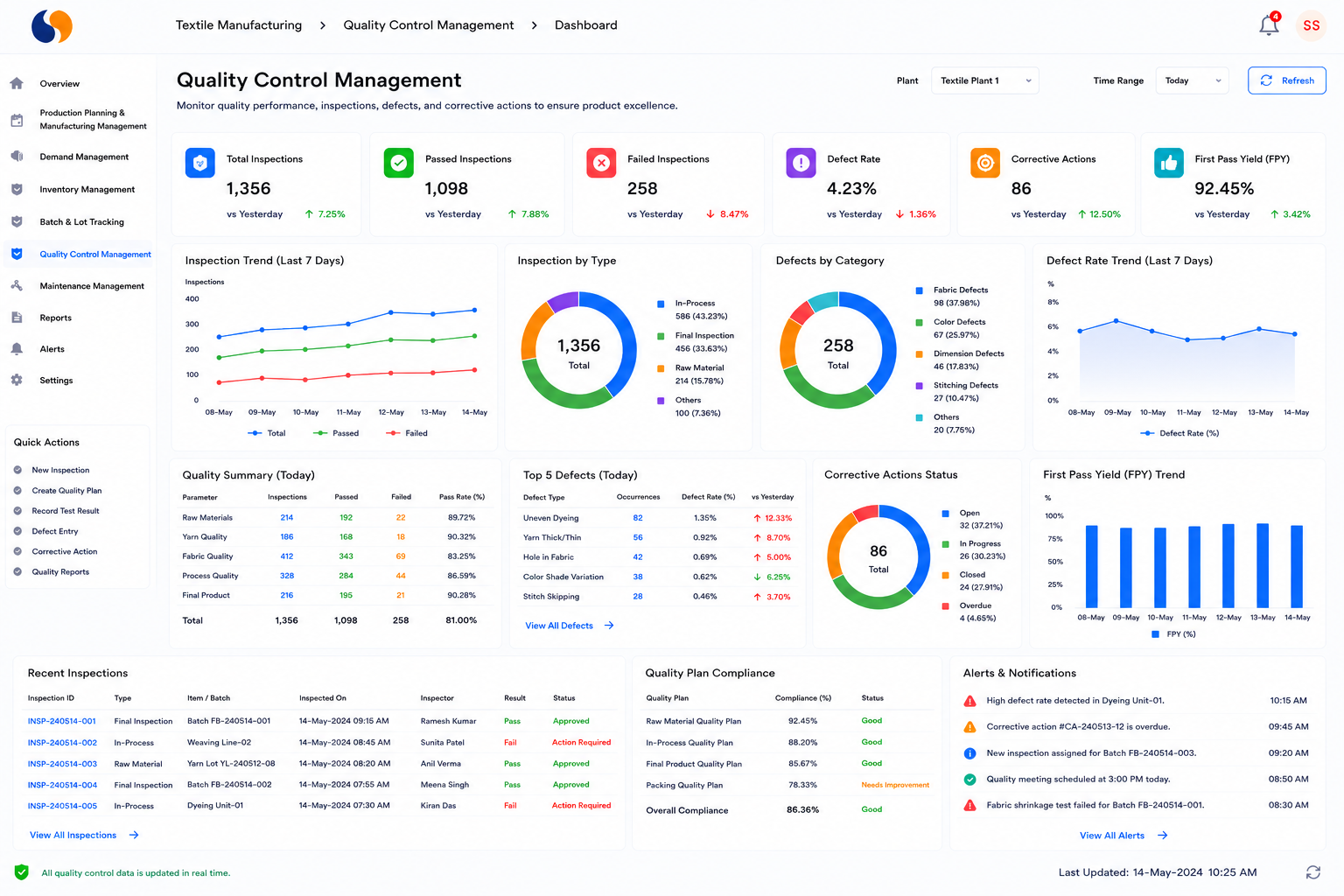
4. Quality Control Management
ERPNext supports quality inspections at different production stages including raw material checking, dye lot verification, fabric inspection, stitching quality checks, and final dispatch approval. Inspection records can be linked directly with production batches and inventory movement, helping businesses maintain product consistency and improve quality monitoring across manufacturing operations.
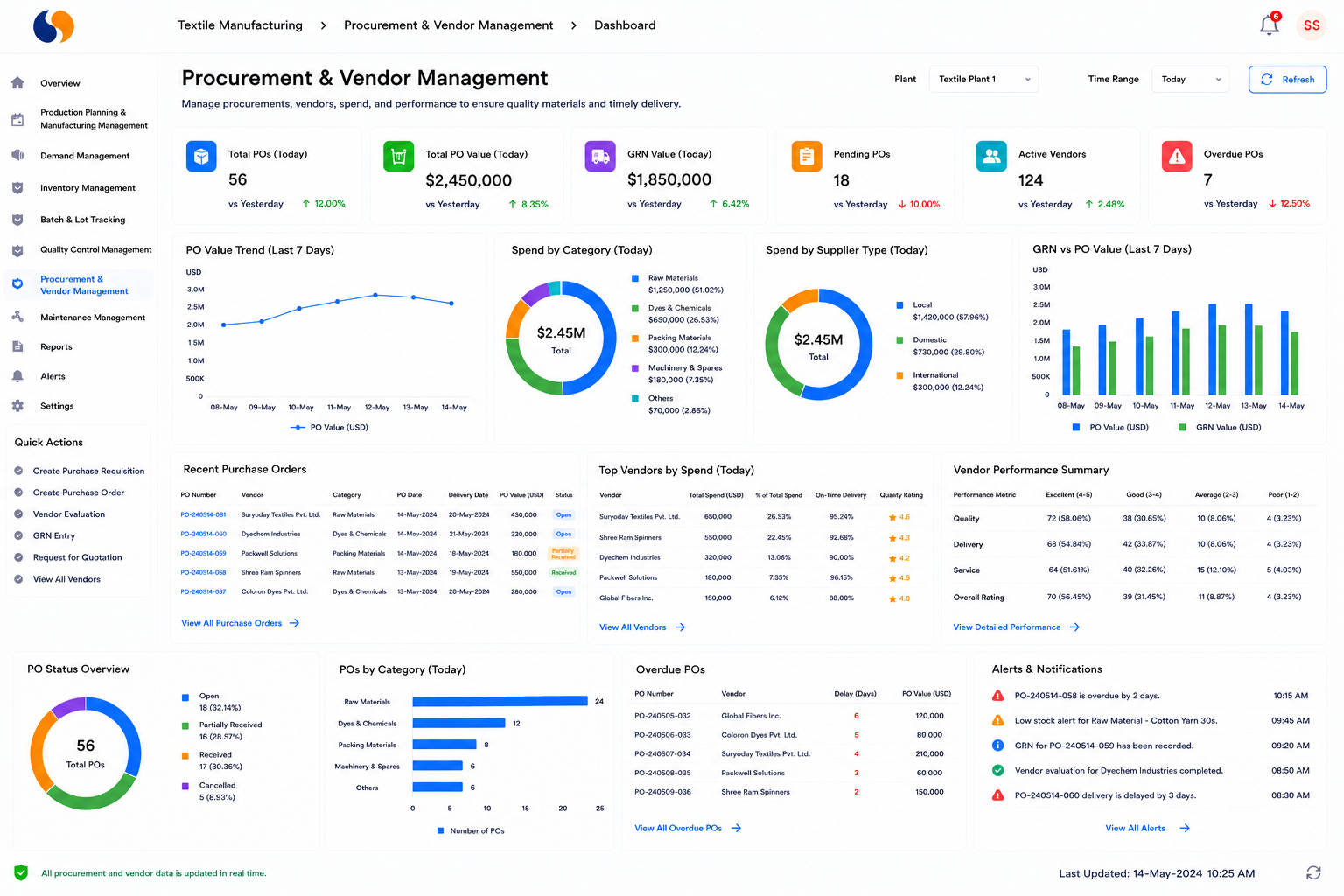
5. Procurement & Vendor Management
ERPNext helps textile businesses streamline procurement workflows by managing supplier quotations, purchase orders, raw material planning, subcontractor coordination, and vendor records through a centralized platform. Procurement teams gain better visibility into material requirements and purchasing activities, helping reduce delays, improve supplier coordination, and maintain smooth production operations.
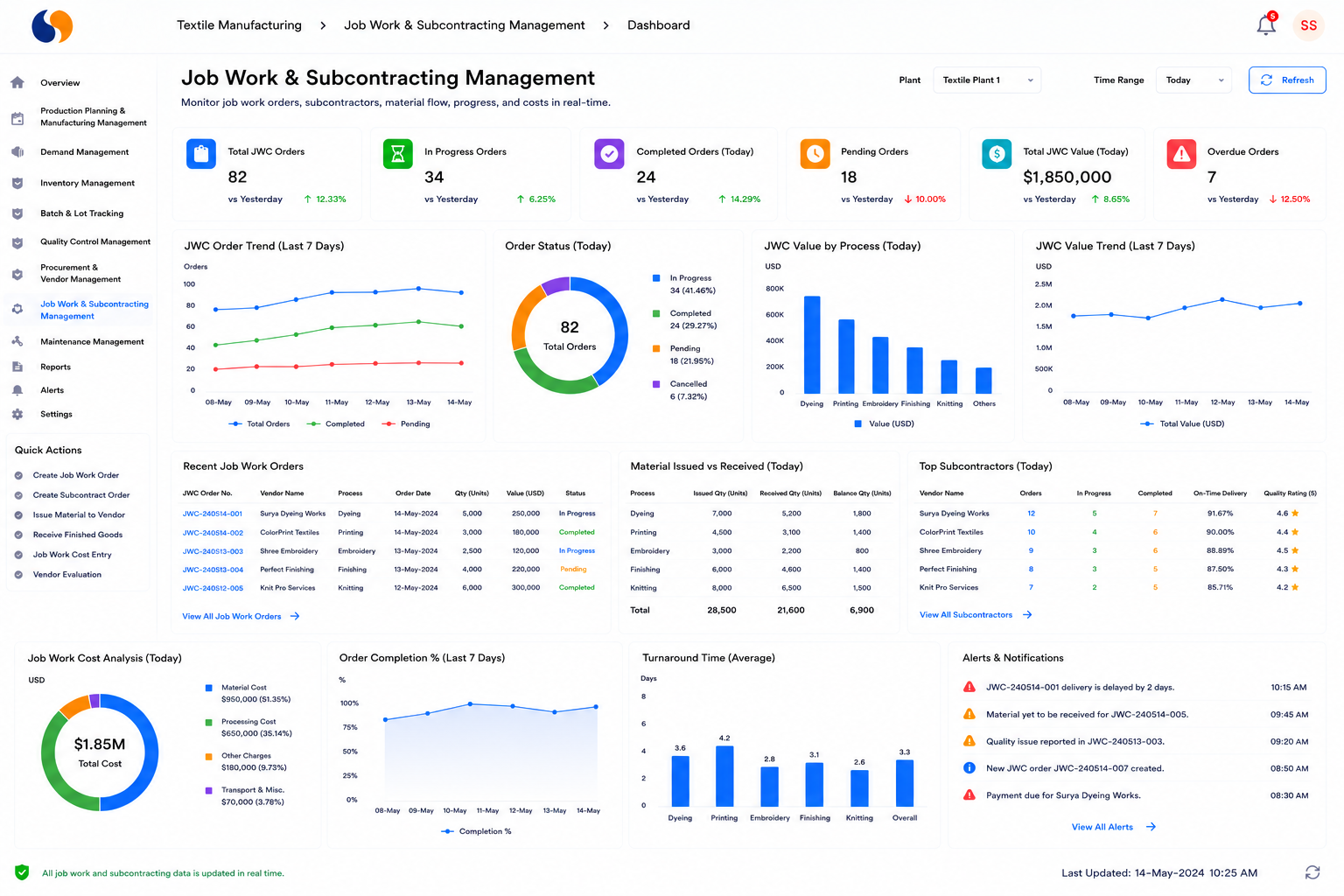
6. Job Work & Subcontracting Management
Textile manufacturers often outsource processes such as dyeing, embroidery, washing, printing, or stitching. ERPNext helps businesses manage subcontracting workflows by tracking material movement, vendor processing status, inward and outward inventory, and subcontracting costs. This improves operational visibility, vendor accountability, and coordination across outsourced production activities.
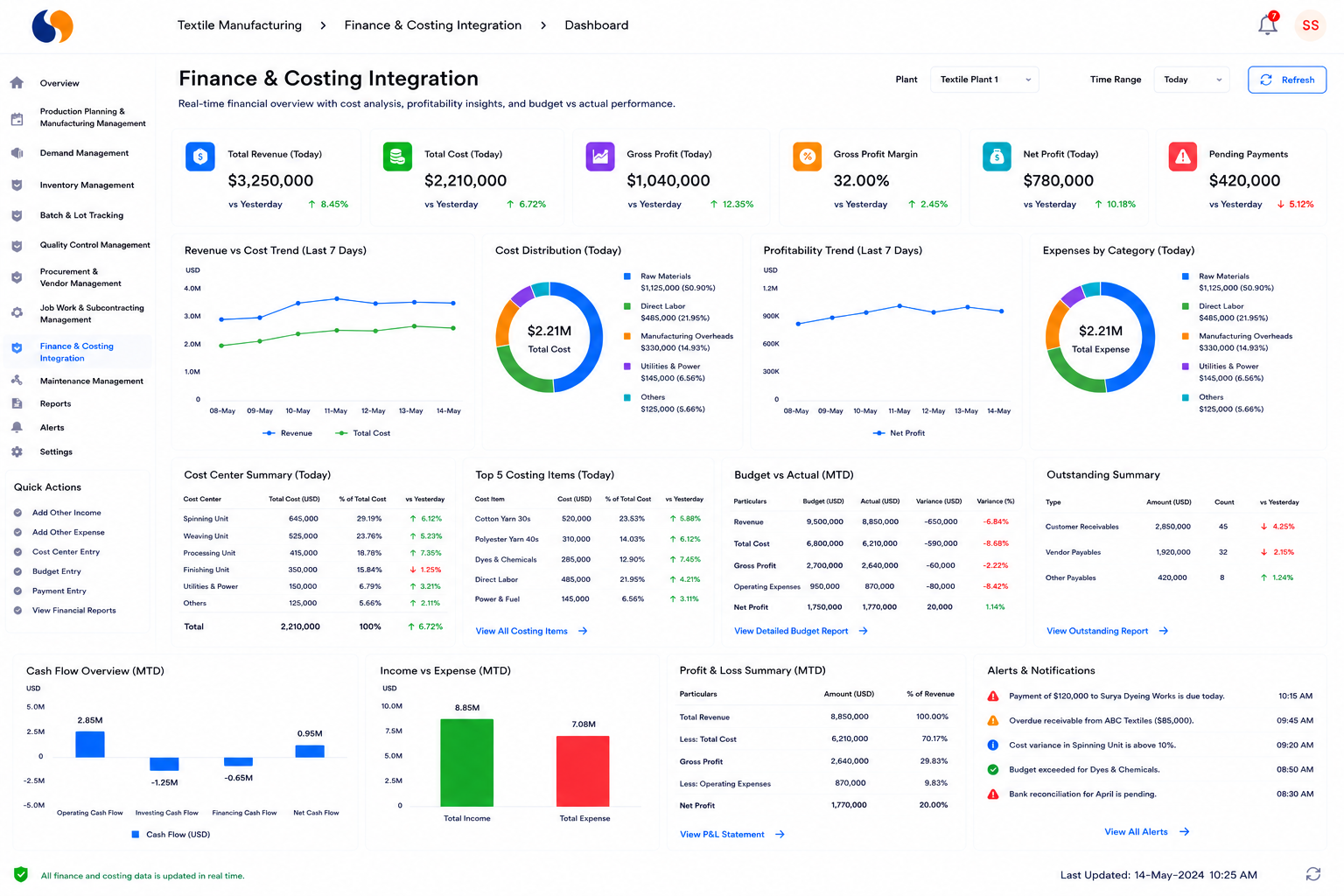
7. Finance & Costing Integration
ERPNext connects textile manufacturing operations with accounting and financial management processes including receivables, payables, taxation, inventory valuation, and production costing. Businesses gain better financial visibility and can track operational costs more accurately while reducing manual reconciliation between departments.
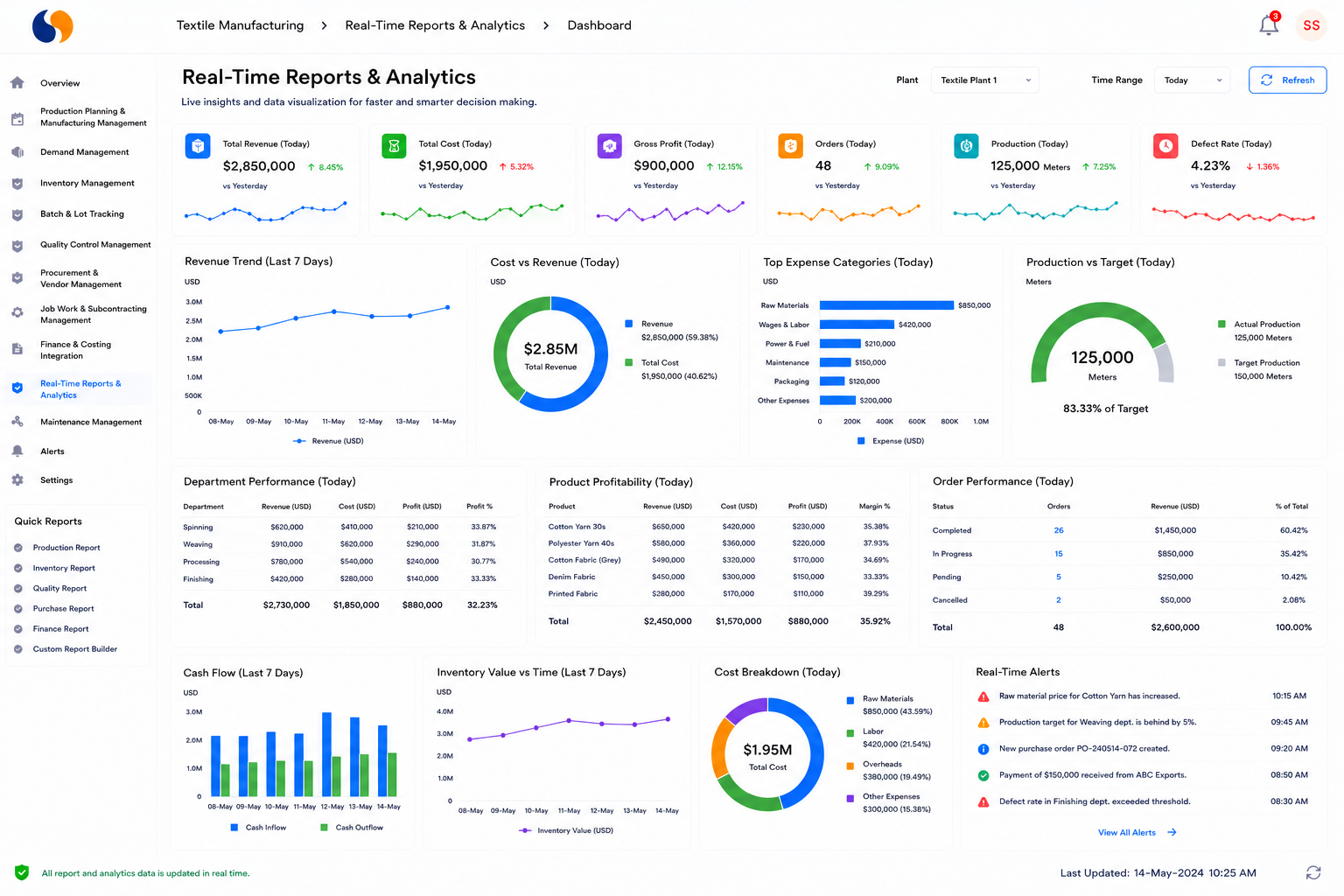
8. Real-Time Reports & Analytics
ERPNext provides real-time dashboards and operational reports for production output, inventory status, procurement activities, warehouse operations, sales orders, and financial performance. Management teams can access centralized business insights for faster decision-making, improved operational monitoring, and better business planning.
Ready to Streamline Your Textile Operations
Improve production visibility, manage inventory accurately, reduce operational delays, and centralize your textile manufacturing workflows with ERPNext.
Frequently Asked Questions
Is ERPNext suitable for textile manufacturing businesses?
Yes. ERPNext supports textile manufacturing workflows including production planning, subcontracting, inventory tracking, batch management, procurement, and financial operations.
Can ERPNext manage textile inventory across multiple warehouses?
ERPNext supports warehouse-wise inventory management, stock transfers, batch tracking, and real-time inventory visibility across multiple locations.
Does ERPNext support textile production planning?
Yes. ERPNext includes production planning tools such as BOM management, work orders, material planning, production scheduling, and manufacturing tracking.
Is ERPNext suitable for garment manufacturing businesses?
ERPNext can be customized for garment production workflows including stitching operations, trims management, production planning, quality inspections, and dispatch tracking.
How does ERPNext improve textile business operations?
ERPNext improves operational visibility, inventory accuracy, workflow automation, production coordination, reporting efficiency, and business decision-making.
How long does textile ERP implementation take?
Implementation timelines depend on business size, operational complexity, customization requirements, and process readiness.
Can ERPNext be customized for textile workflows?
Yes. ERPNext offers workflow customization for textile-specific operational requirements, approvals, reports, dashboards, and production processes.
Is ERPNext suitable for small and mid-sized textile manufacturers?
ERPNext is suitable for growing textile businesses that require centralized operational management without the complexity of traditional enterprise ERP systems.
What modules are commonly used in textile ERP implementation?
Common modules include inventory, manufacturing, procurement, CRM, finance, warehouse management, quality control, subcontracting, HR, and reporting.
Rating: 5 / 5 (1 votes)