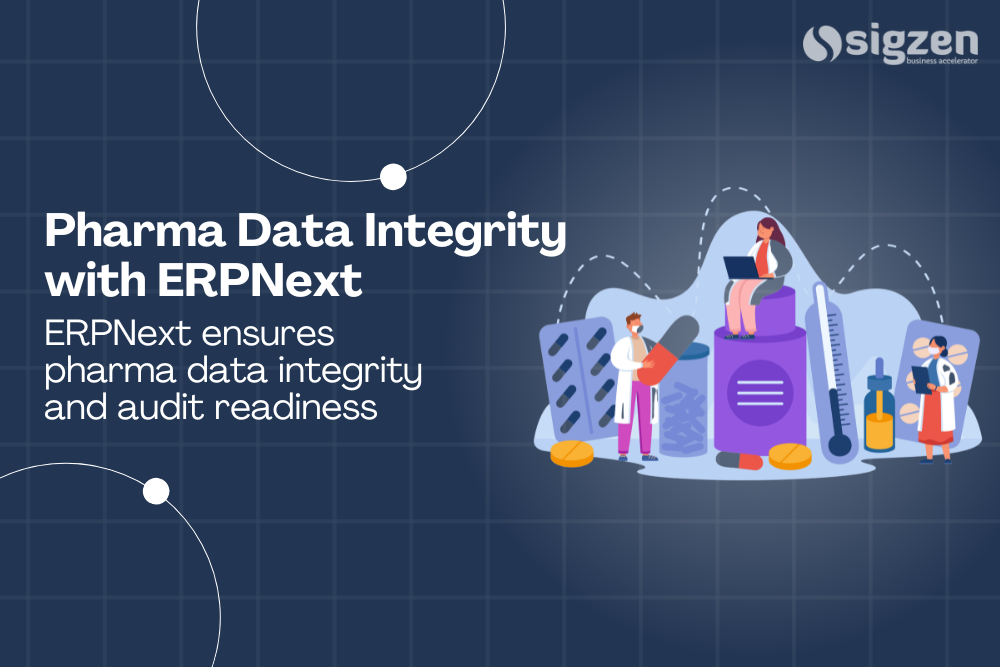
Introduction: Data Integrity Is the Foundation of Pharma Compliance
In the pharmaceutical industry, data integrity is not optional it is mandatory. Regulatory authorities such as the US FDA, WHO-GMP, and other global agencies increasingly focus on how data is created, modified, stored, and retrieved across pharmaceutical operations. This is where ERP for Pharma Industry becomes essential. Any gaps in data integrity can lead to audit observations, warning letters, or even production shutdowns.
A well-implemented ERP for Pharma Industry ensures that data is accurate, traceable, secure, and audit-ready at all times. Solutions like ERPNext, supported by expert ERPNext services, help pharma companies embed data integrity and audit readiness directly into daily workflows instead of relying on reactive documentation during inspections.
What Is Data Integrity in the Pharma Industry?
Data integrity refers to the completeness, consistency, accuracy, and reliability of data throughout its lifecycle. Regulatory bodies expect pharma companies to follow ALCOA+ principles, ensuring data is:
Attributable – Who created or modified the data
- Legible – Readable and understandable
- Contemporaneous – Recorded at the time of activity
- Original – Source data is preserved
- Accurate – Free from errors
Manual systems and disconnected software struggle to meet these standards consistently, making ERP for Pharma Industry essential.
Why Manual and Legacy Systems Fail Audit Readiness
No Automated Audit Trails
Manual systems cannot automatically record who changed data, when, or why. This lack of traceability is a major red flag during FDA and WHO-GMP audits.
Inconsistent Data Across Departments
When departments use separate tools, data often conflicts between production, quality, and finance. Auditors frequently identify these inconsistencies as compliance gaps.
Difficulty Proving Data Authenticity
Paper records and spreadsheets make it hard to prove that data is original, accurate, and unaltered. This weakens trust in records during regulatory inspections.
Delayed Access to Records During Inspections
Manual record retrieval is slow and error-prone during audits. Delays in producing documents can escalate minor issues into serious audit observations.
ERP for Pharma Industry and Audit Readiness
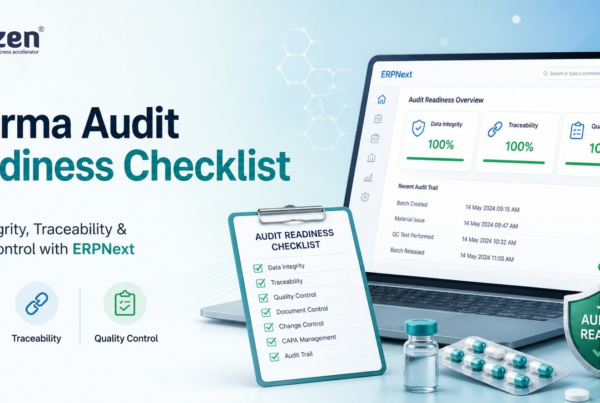
ERP for Pharma Industry plays a vital role in achieving and maintaining audit readiness across pharmaceutical operations. It ensures that all manufacturing, quality, and compliance data is centrally stored and easily accessible during inspections. Automated audit trails record every transaction and approval, providing full transparency to auditors. Integrated document control enables instant retrieval of batch records, SOPs, and quality reports. By embedding compliance into daily workflows, ERP systems help pharma companies face audits with confidence and minimal disruption.
How ERP for Pharma Industry Strengthens Data Integrity
Centralized and Controlled Data Management
ERPNext centralizes all critical pharma data production, quality, inventory, and finance—into a single system. This eliminates duplicate data entry and ensures one version of truth across departments.
Key benefits include:
- Consistent data across production, QC, and QA
- Reduced manual intervention
- Improved cross-departmental alignment
Centralization is the first step toward audit-ready operations.
Automated Audit Trails and User Accountability
A core strength of ERP for Pharma Industry is automated audit trail management. ERPNext records:
- Who performed each action
- When the action occurred
- What values were changed
This level of traceability supports 21 CFR Part 11 and WHO-GMP expectations, ensuring full accountability without manual logs.
Role-Based Access and Permission Controls
Data integrity depends on controlled access. ERPNext enforces role-based permissions so users can only view or modify data relevant to their responsibilities.
Unauthorized Changes
Role-based access ensures only authorized users can edit critical financial or operational records. This protects the system from intentional misuse or unapproved modifications.
Accidental Data Manipulation
By restricting editing rights based on user roles, ERPNext minimizes the risk of unintentional data errors. This safeguards master data, transactions, and system accuracy.
Compliance Breaches
Controlled access supports regulatory compliance by limiting sensitive data exposure to designated personnel. It also maintains audit trails for accountability and transparency.
Permission-Driven Workflows Ensure Governance and Regulatory Reliability
Structured approval hierarchies and role-based workflows maintain operational discipline. This strengthens internal controls and ensures adherence to organizational and legal standards.
Permission-driven workflows ensure governance and regulatory reliability.
Change Management and Compliance Governance
Change management is a critical requirement in regulated pharma environments, where any modification to processes, formulations, or systems can directly impact product quality and compliance. ERPNext enforces structured, approval-based change workflows that ensure every change is properly documented and justified. Each update is reviewed by authorized personnel before implementation, preventing unauthorized or uncontrolled modifications. The system maintains a complete history of changes, including who approved them and when. This level of traceability supports regulatory audits and internal reviews. As a result, organizations achieve stronger compliance governance while significantly reducing regulatory and operational risk.
Real-World Impact of ERP for Pharma Industry
Example: Mid-Sized Pharma Manufacturer
A mid-sized pharma company struggled with audit preparation and data inconsistencies across departments. After implementing ERPNext:
- Audit preparation time reduced significantly
- Data discrepancies dropped
- Regulatory confidence improved
ERP-driven data integrity transformed compliance from a challenge into a competitive advantage.
Why ERPNext Is the Right ERP for Pharma Industry
ERPNext stands out because it offers:
- Strong manufacturing and quality modules
- Built-in audit trails and permissions
- Customizable workflows for pharma needs
- Scalable architecture for growing companies
When delivered through Sigzen’s ERPNext services, ERPNext becomes a compliance-ready digital backbone for pharma operations.
Frequently Asked Questions (FAQs)
1. Why is data integrity critical in the pharma industry?
Data integrity ensures that all pharmaceutical records remain accurate, complete, and traceable throughout their lifecycle. Regulatory bodies require reliable data to verify product quality and patient safety. Any compromise in data integrity can result in compliance violations and severe penalties.
2. How does ERP for Pharma Industry improve audit readiness?
ERP for Pharma Industry centralizes manufacturing, quality, and compliance data into one secure system. It automatically maintains audit trails and controlled user access. This allows companies to retrieve accurate records instantly during regulatory inspections.
3. Can ERPNext support FDA and WHO-GMP requirements?
Yes, ERPNext supports key compliance requirements such as audit trails, electronic records, document control, and batch traceability. Its role-based permissions align with regulatory expectations like 21 CFR Part 11 and WHO-GMP. With proper implementation, it strengthens inspection readiness.
4. Is ERPNext suitable for small and mid-sized pharma companies?
ERPNext is highly scalable and cost-effective, making it ideal for growing pharma businesses. It offers modular functionality that can expand as operations grow. This flexibility allows smaller companies to achieve enterprise-level compliance without excessive costs.
5. How does Sigzen help with ERPNext implementation for pharma?
Sigzen provides pharma-specific ERPNext services tailored to regulatory requirements and operational workflows. This includes process mapping, customization, validation support, and user training. Ongoing support ensures continuous compliance and system optimization.
Conclusion: Data Integrity and Audit Readiness Start with the Right ERP
In the pharma industry, compliance failures are costly both financially and reputationally. Manual systems and fragmented tools can no longer meet modern regulatory expectations.
A robust ERP for Pharma Industry ensures data integrity, transparency, and audit readiness by design. With ERPNext and Sigzen’s ERPNext services, pharma companies gain confidence, control, and compliance enabling them to focus on growth without regulatory fear.