Introduction: Transforming the E-commerce Landscape with ERPNext
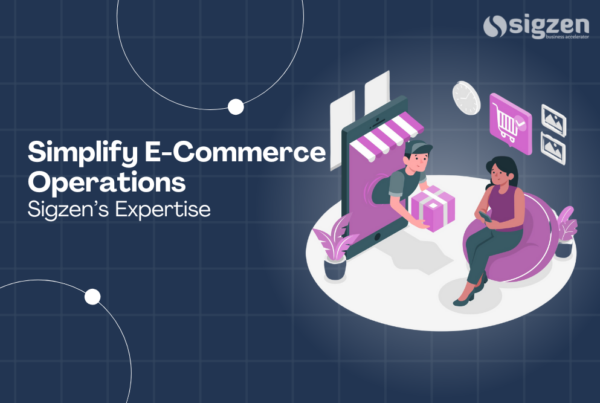
The e-commerce and retail world has become intensely fast-paced, with customer expectations rising and competition growing every day. Businesses must manage multiple processes simultaneously—inventory control, order processing, customer service, payment tracking, and shipment updates while maintaining complete accuracy and speed. When these workflows depend on disconnected tools, manual entries, or outdated systems, efficiency drops dramatically and errors become frequent.
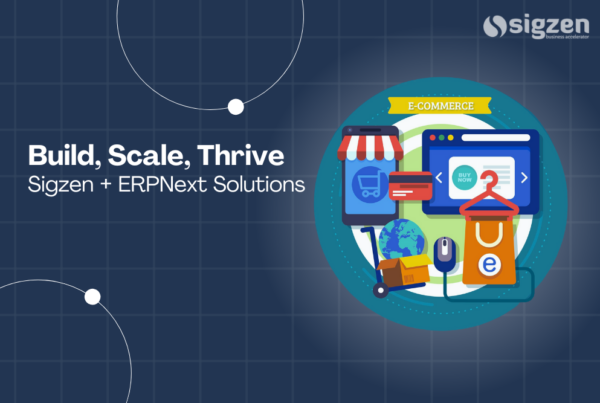
To stay ahead in this environment, adopti ng an ERP for Retail and E-commerce has become essential rather than optional. ERPNext by Sigzen provides a fully integrated solution that brings your entire business together on one digital platform. It connects inventory, sales channels, CRM, supply chain, and financial operations into a single system, eliminating friction between departments and giving real-time visibility across the organization. This ensures smooth, consistent, and scalable growth.
This article explores how ERPNext optimizes integrated e-commerce operations, simplifies complex workflows, improves customer experience, and creates a strong digital foundation for businesses of all sizes.
Understanding ERP for Retail and E-commerce
An ERP system for retail and e-commerce brings together core business functions such as sales, inventory management, logistics, CRM, and accounting in one comprehensive platform. Instead of running several separate systems, businesses work from one unified source of truth. This leads to better data consistency, faster decision-making, and more reliable daily operations. With automation, real-time updates, and centralized information, companies can offer faster order fulfillment, accurate inventory availability, and a more personalized customer experience.
Key Challenges in E-commerce Integration
Many online businesses struggle with fragmented operations. When orders are coming from multiple channels—online stores, marketplaces, and offline stores—it becomes difficult to maintain accurate inventory levels and process orders efficiently. Without full integration, stockouts, overselling, and fulfillment delays become common problems.
Inventory management itself becomes challenging when managing fast-moving goods, returns, backorders, and multiple warehouses. Similarly, fulfilling orders at scale requires coordinated effort between storage locations, shipping partners, and customer service. As the business grows, managing customer communications manually becomes harder, and maintaining consistent service quality becomes more demanding.
These challenges highlight the need for a system that can bring all processes into one streamlined and synchronized workflow.
How ERPNext Transforms E-commerce Integration
ERPNext provides a powerful and connected backbone for e-commerce operations. It centralizes sales and order management by automatically updating inventory, generating invoices, and initiating fulfillment as soon as an order is placed. Businesses selling through multiple channels can consolidate all orders into one system, eliminating the risk of missed or duplicated orders. This ensures real-time tracking of every order from purchase to delivery, improving both transparency and operational speed.
Inventory management becomes significantly more accurate through ERPNext’s real-time stock synchronization across platforms. When inventory levels change—whether due to sales, returns, or restocking—the system updates instantly across all channels. Automated replenishment ensures that items are reordered before they run out, while multi-warehouse coordination allows businesses to manage stock distribution and transfers efficiently.
ERPNext integrates seamlessly with popular e-commerce platforms such as Shopify, WooCommerce, and Magento. This integration ensures a continuous flow of sales, customer, and product data without manual entry. Customers benefit from more accurate delivery timelines, real-time order updates, and fewer delays. Financial data, such as payments, refunds, and revenue, is updated instantly, allowing businesses to maintain accurate books with minimal effort.
Customer relationship management is elevated through ERPNext’s integrated CRM tools. Businesses can track customer interactions, monitor purchase history, and personalize communication based on real behavior. Automated follow-ups, reminders, and support ticket tracking help companies offer faster and more reliable service.
ERPNext also provides advanced reporting capabilities. Real-time analytics on sales performance, customer behavior, financial metrics, and inventory trends help businesses make informed decisions. With this integrated intelligence, managers can improve marketing strategies, optimize inventory spending, and enhance operational planning.
Benefits of Using ERPNext for Retail and E-commerce
Adopting ERPNext enhances the entire operational structure of a retail or e-commerce business. One major benefit is a substantial improvement in operational efficiency. Automation reduces repetitive manual tasks, speeds up order fulfillment, and ensures that inventory information stays accurate across all channels.
Customer experience becomes significantly better when the system provides precise stock visibility, on-time deliveries, and fast updates. When customers have a smooth and predictable buying experience, retention naturally increases and brand loyalty grows stronger.
Another key benefit is cost reduction. ERPNext minimizes unnecessary procurement, prevents overstocking, and reduces losses from inaccurate orders or shipping errors. These improvements directly impact profitability.
As businesses grow, ERPNext scales effortlessly. Whether adding new warehouses, expanding product lines, or increasing order volumes, the system adapts without compromising performance. Decision-making also becomes more data-driven through real-time analytics, helping businesses plan promotions, manage procurement, and optimize customer outreach with confidence.
Real-World Case Study: Sigzen’s Impact on an E-commerce Business
A growing e-commerce company approached Sigzen with challenges in managing orders from multiple platforms and maintaining synchronized inventory. Order delays, inaccurate stock levels, and customer dissatisfaction were creating bottlenecks for growth.
Sigzen implemented ERPNext with customized workflows to integrate sales channels, automate stock updates, and streamline fulfillment. Within a short period, the business experienced a 30% reduction in fulfillment time, fewer stockouts due to automated inventory tracking, and improved customer satisfaction with timely service. This transformation helped the business scale smoothly without increasing operational overhead.
Best Practices for Implementing ERPNext in E-commerce
Businesses adopting ERPNext should define clear objectives—whether improving order processing, reducing errors, or improving stock visibility. Preparing clean and accurate data before migration ensures a smooth transition. Teams should receive proper training to make full use of the system’s features, and regular monitoring of key performance indicators helps ensure continuous improvement.
Addressing Common Concerns About ERP Implementation
Many businesses worry about the cost or disruption caused by ERP implementation. While ERP systems involve initial investment, the long-term gains in efficiency and reduced wasted resources far exceed the cost. ERPNext integrates smoothly with existing e-commerce platforms, minimizing interruptions. With modern security practices, including encryption and access control, ERPNext ensures that business data remains safe and protected.
Conclusion: Achieve Long-Term Growth with ERPNext for Retail and E-commerce
Managing retail and e-commerce operations requires precision, coordination, and automation. ERPNext offers a powerful, unified platform that simplifies complex workflows and elevates the customer experience. With Sigzen’s implementation expertise, businesses gain a reliable partner who ensures smooth adoption and measurable improvements. By integrating ERPNext into daily operations, companies can achieve significantly higher efficiency, better scalability, and long-term profitability.